
White-Tailed Deer
Appearance:
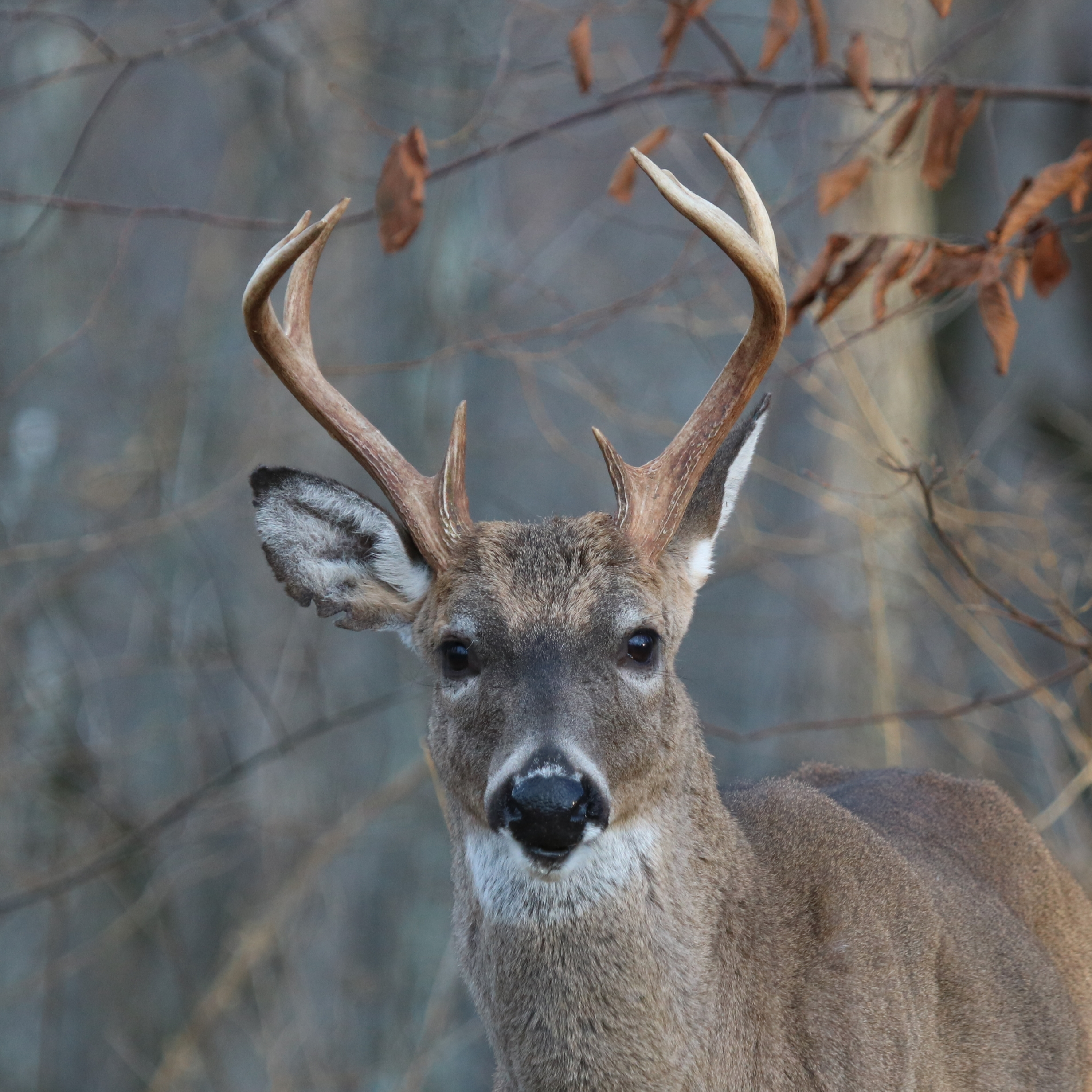
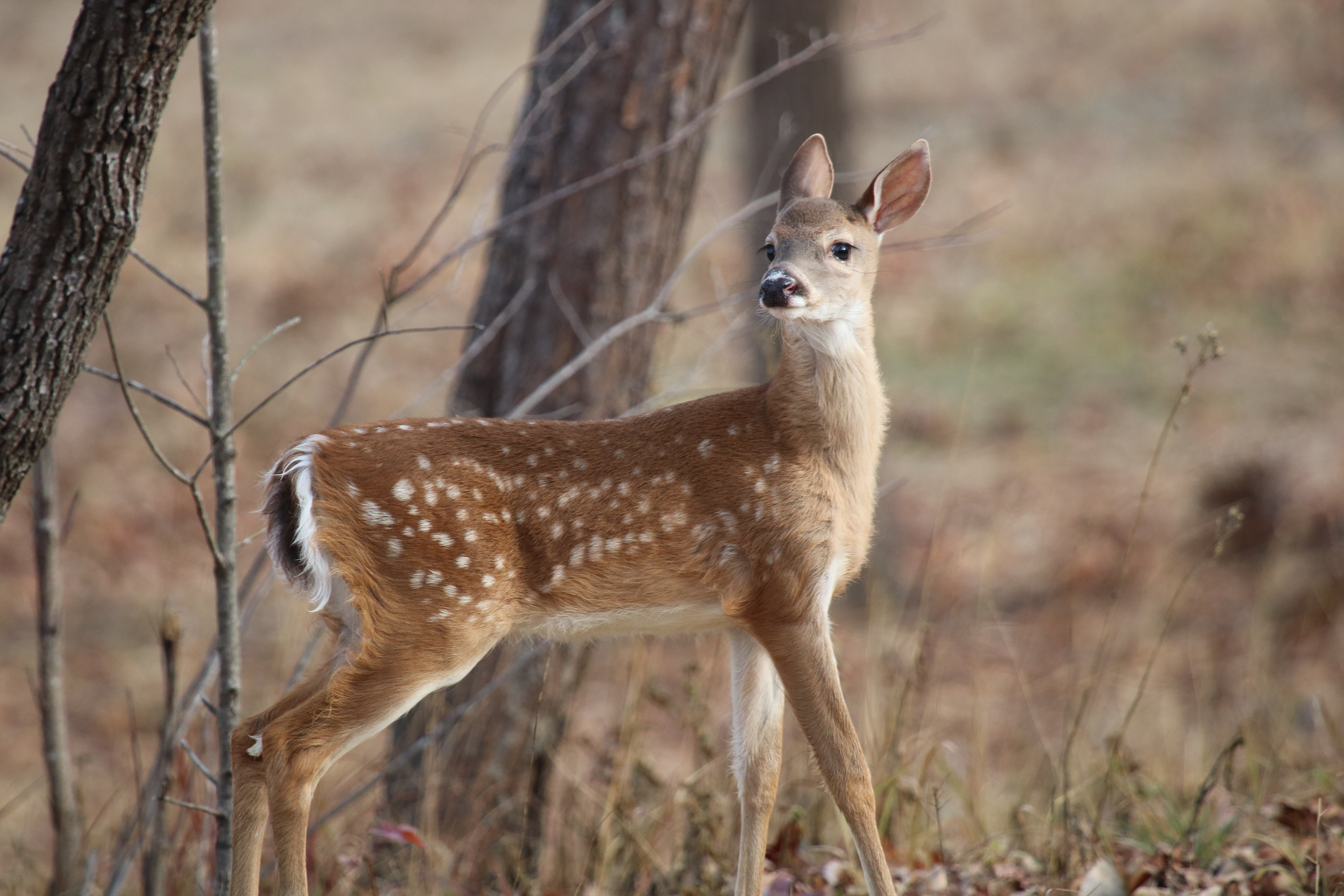
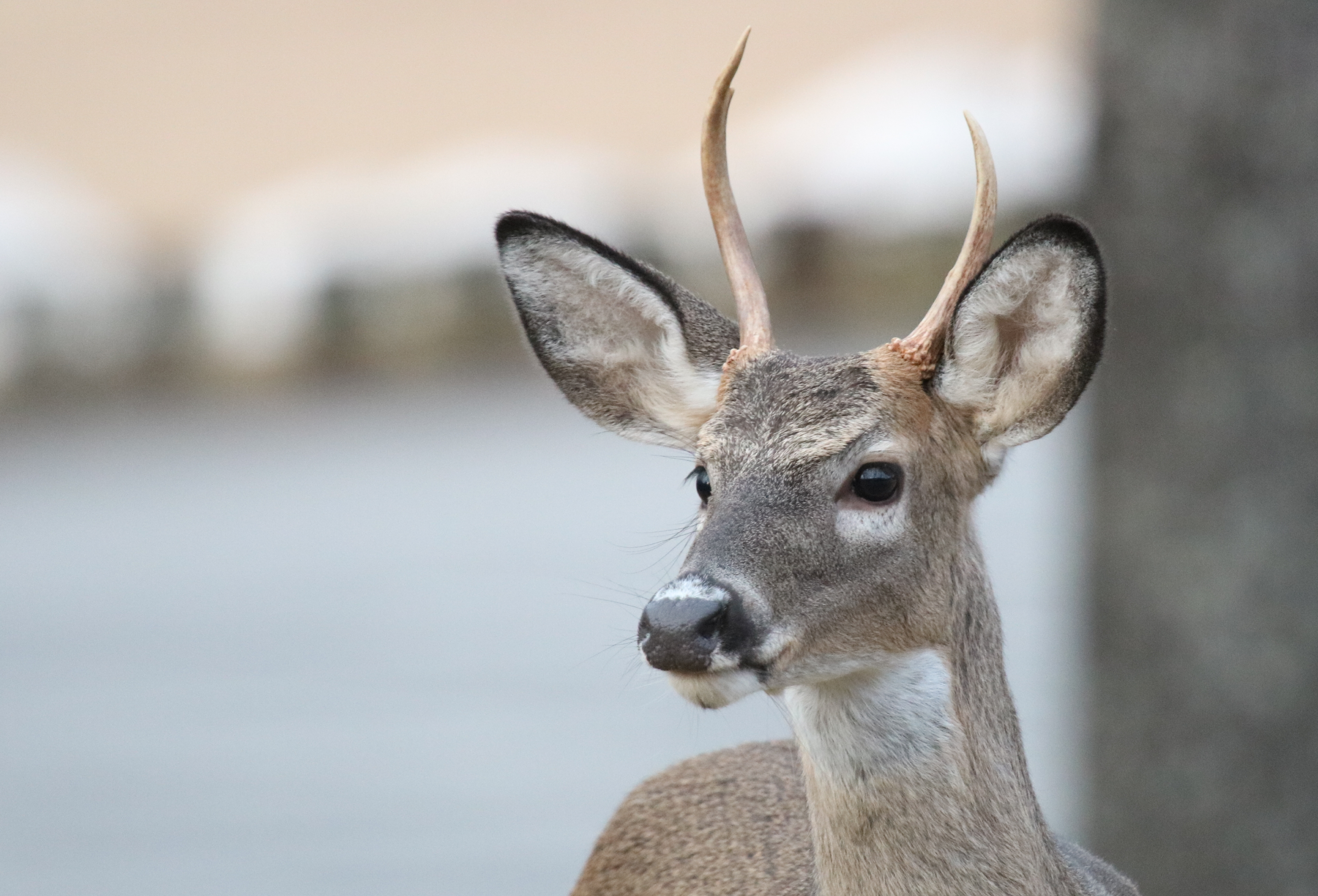
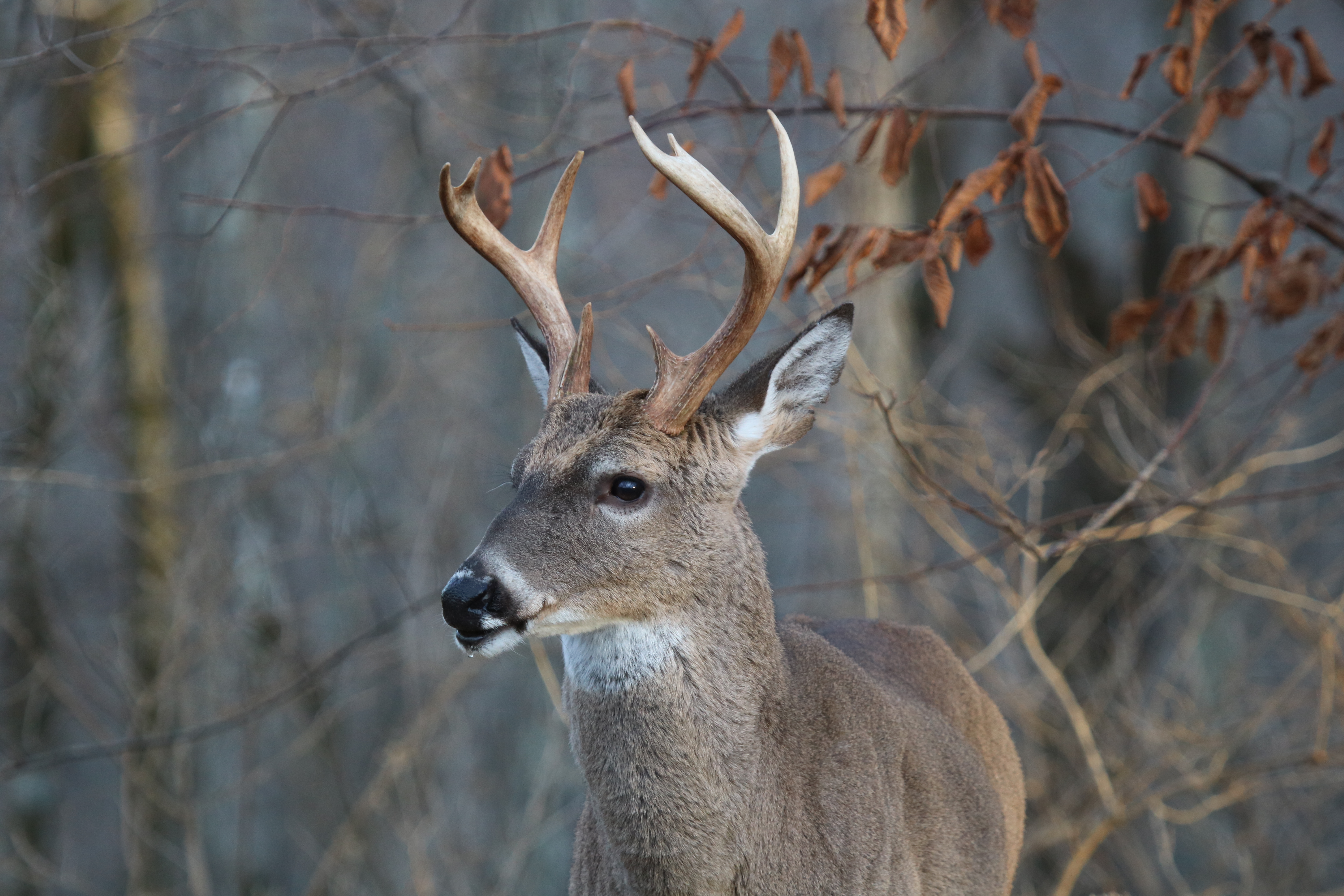
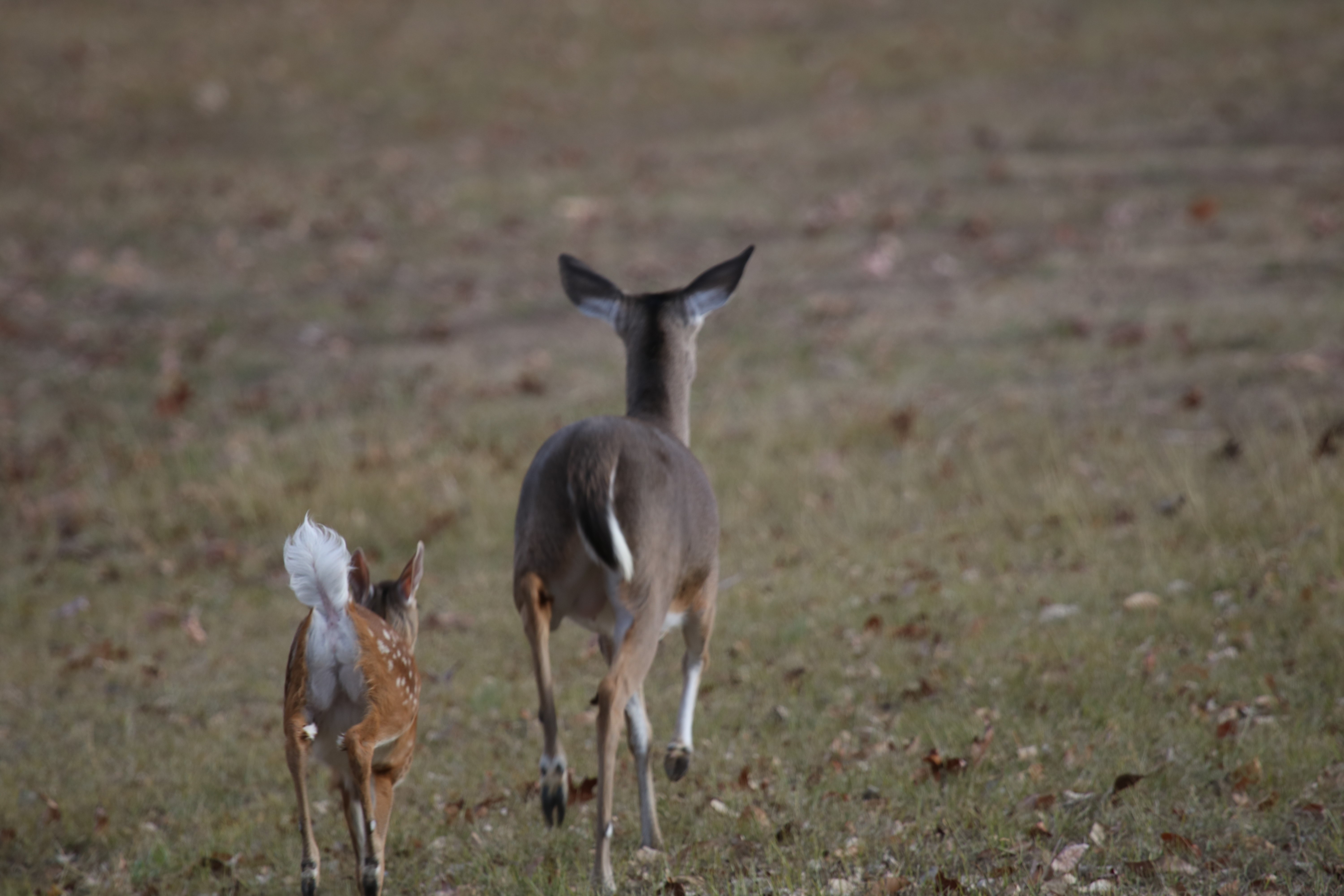
White-tailed deer (Odocoileus virginianus) are some of the most recognized wildlife in Alabama. Two seasonal molts produce two distinctly different coats. The summer coat consists of short, thin hairs that are reddish-brown in color. This coat is molted in August and September and is replaced with the winter coat, which consists of longer, hollow grayish brown hairs over a short wooly undercoat. The hollow hairs and the wooly undercoat provide significant insulation against cold winter weather. The winter coat is replaced by the summer coat in April and May. A deer’s belly, chest, throat, and chin are white throughout the year. The coats of newly born fawns are reddish-brown with several hundred small white spots. This spotted coat helps conceal them from predators. A fawn’s spotted coat is replaced by the brownish-gray winter coat at approximately three to four months of age. Deer with aberrant color phases are not uncommon in Alabama. A pure white (albino) or black (melanistic) deer is indeed rare. However, harvests of piebald deer are fairly common throughout Alabama. Piebald deer are characterized by having an almost all-white coat with some brown splotches present.
Habitat:
Everywhere. White-Tailed Deer are heavily overpopulated in Alabama. I find them most consistently at Lake Guntersville state park, but really just walk around in the woods and eventually you’ll come across one. Or just drive at night enough and one will jump out in front of you.
Behavior:
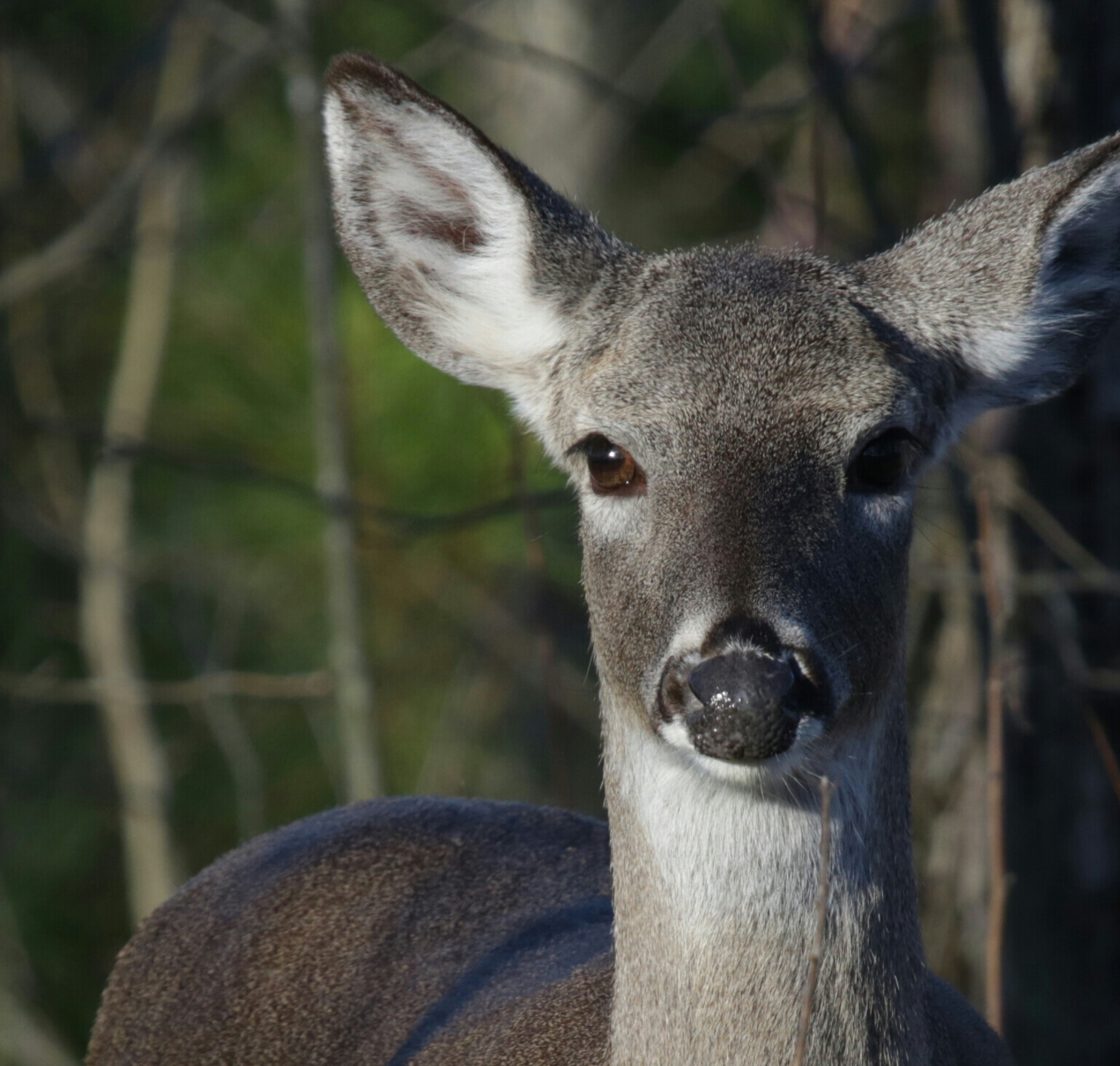
Deer have an excellent sense of smell. Their elongated noses are filled with an intricate system of nasal passages that contain millions of olfactory receptor sites. Their keen sense of smell is very important for avoiding predators, identifying other deer, and identifying food sources. Perhaps most importantly, their sense of smell is important for scent communication with other deer. Deer have seven glands that are used primarily for scent communication. Deer also have an excellent sense of hearing. Large, moveable ears allow them to detect sounds at great distances and pinpoint the direction of these sounds. Deer have numerous vocalizations, including various grunts, bawls, mews, whines, wheezes, and snorts.