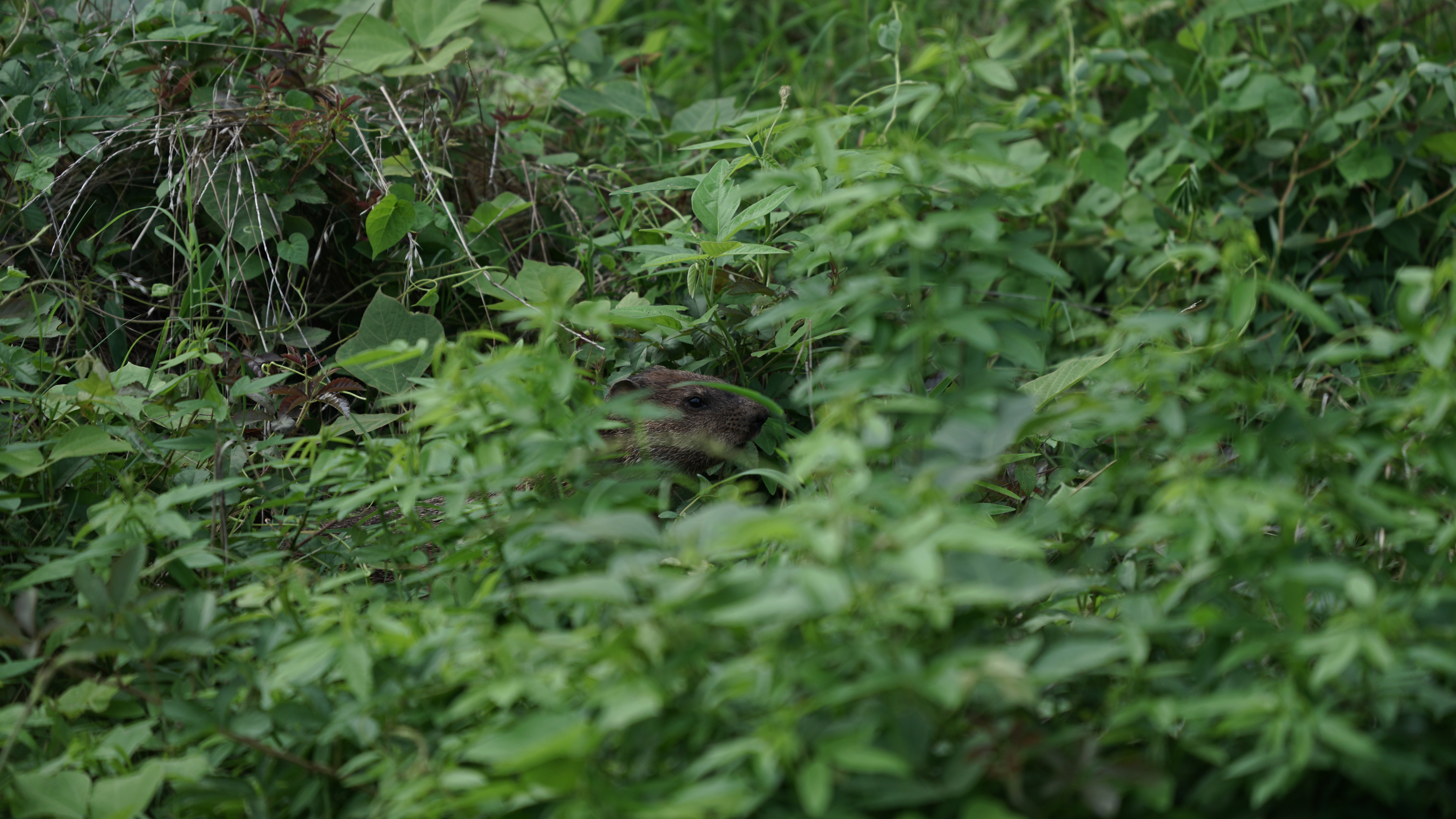
Wood Chuck
Appearance:
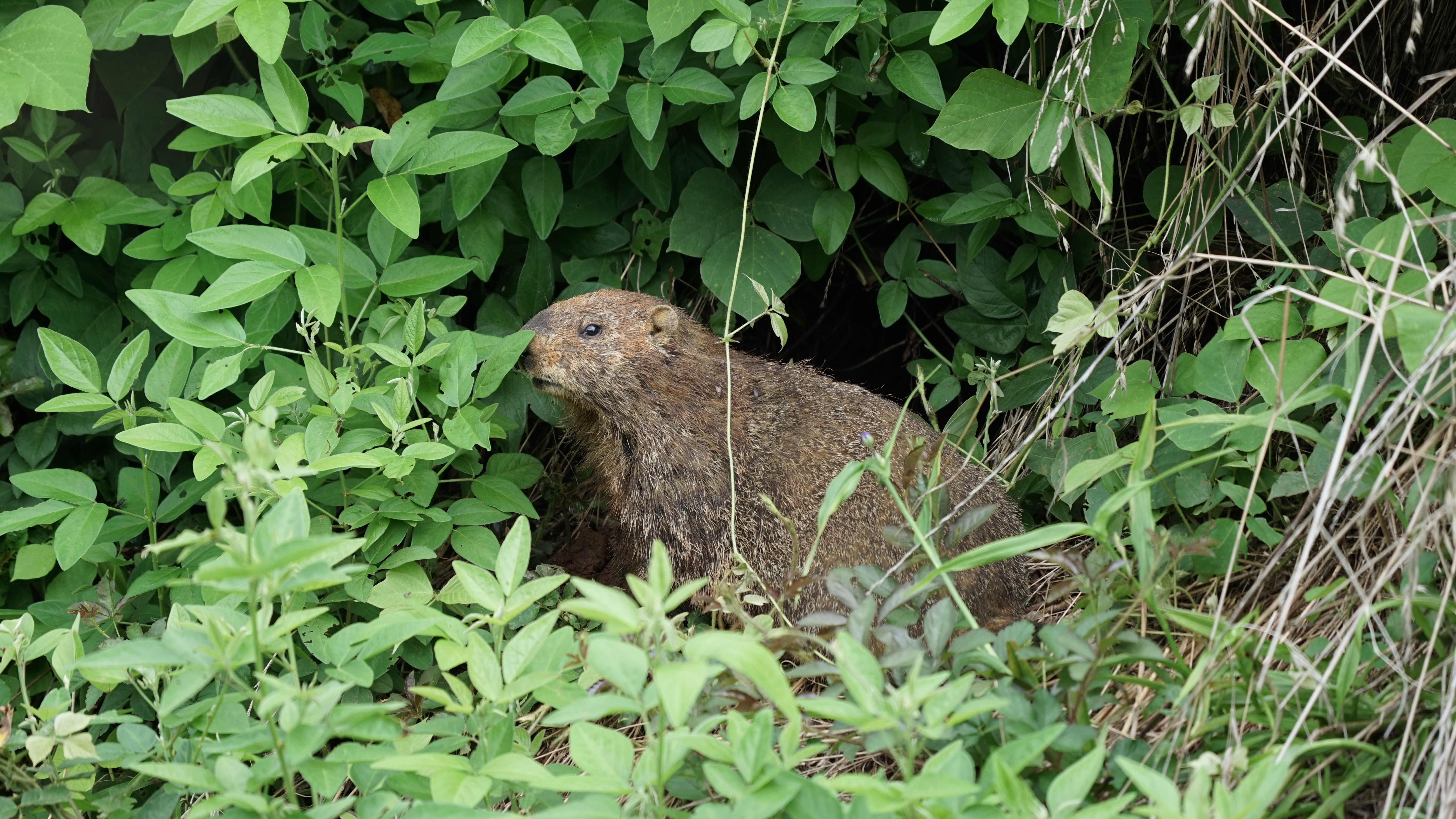
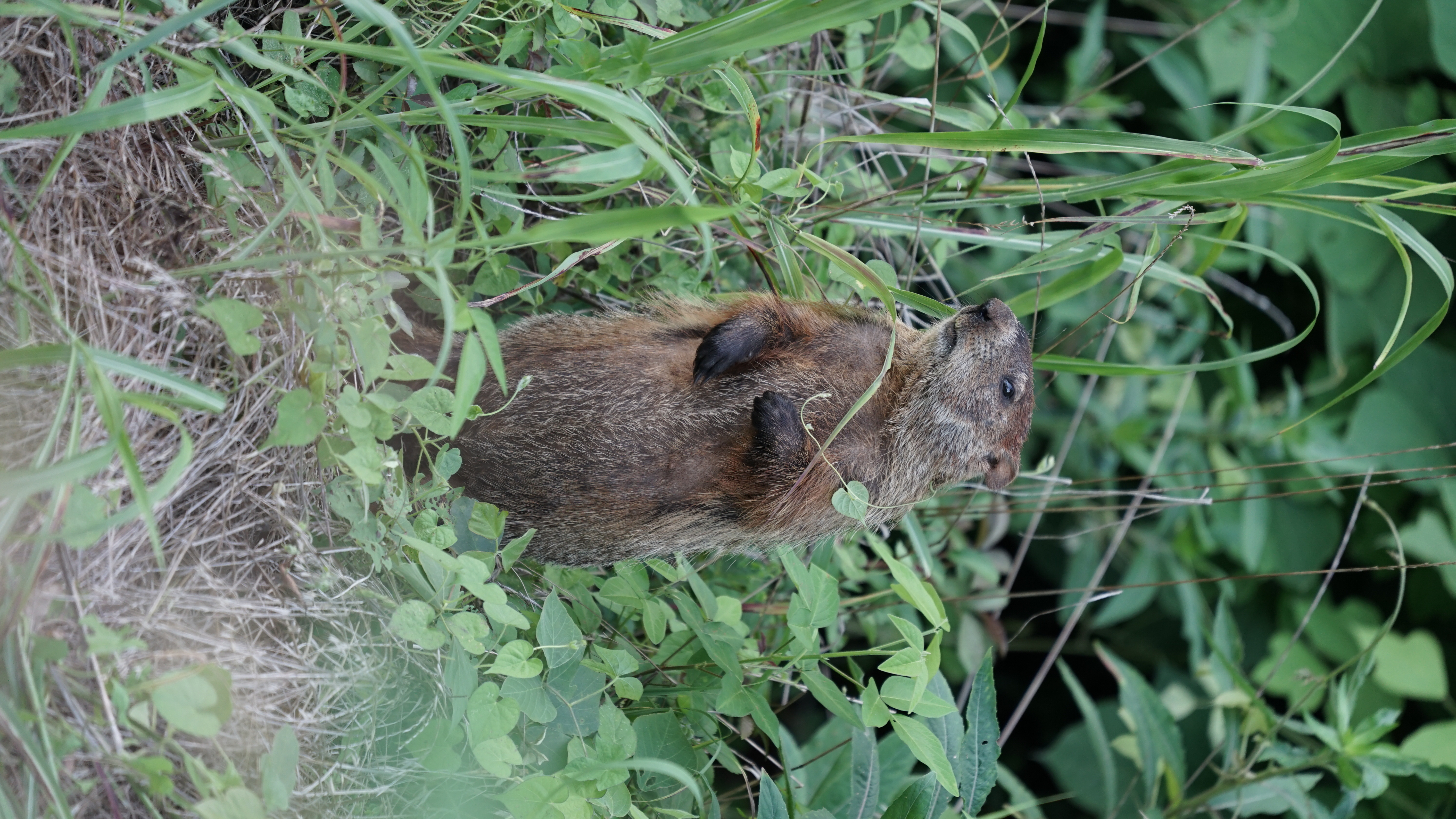
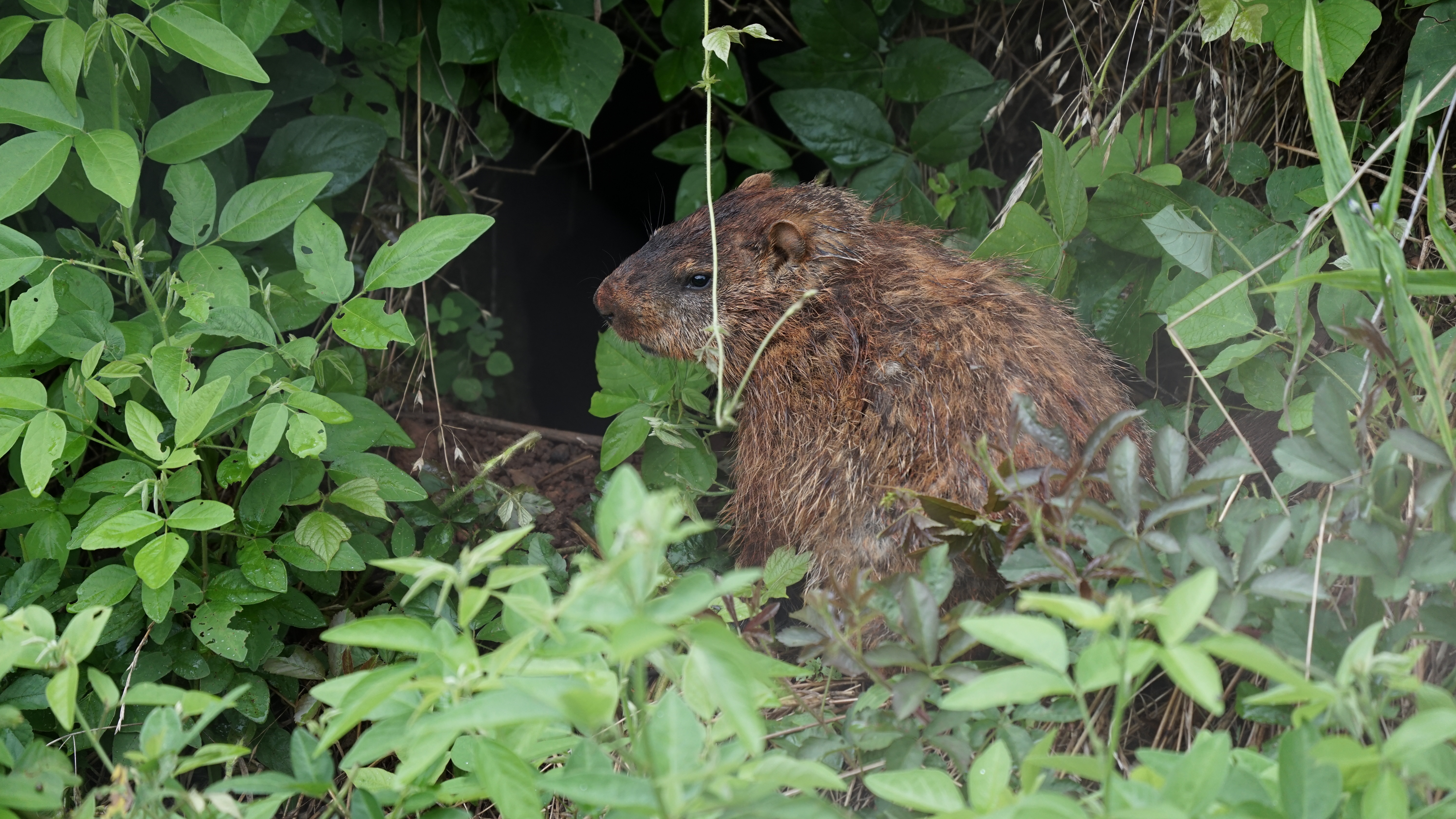
The woodchuck is a member of the squirrel family Sciuridae and classified as a rodent. This tunneling mammal has a barrel-shaped body up to 24 inches in length and five to six inches in height. It weighs approximately 10 pounds and has a slightly flattened six- inch fur tail. Its short, powerful legs (four to five inches long) aid greatly with digging and tunneling. The woodchuck has five toes on each foot. The toes on the front feet are flexible, enabling it to grasp and hold food items. The pelage or fur coloring of the woodchuck is basically brown with silver tipped guard hairs which give it a grayish to grizzled colored appearance. Some individuals, depending on their range and habitat, may be very dark to black in color. Ears are short and round, with inner muscles that tightly close the ear canal to prevent dirt from entering when tunneling. The incisor teeth, a characteristic of all rodents, are constantly growing and kept worn by gnawing hard materials. The eyes are positioned near the top of its head. This feature allows the woodchuck to survey its surroundings from the den while keeping most of its body hidden from would-be predators.
Habitat:
They prefer to inhabit the open edges of forest, pastures, farmlands and vegetative gullies.
Behavior:
Despite the name I have never seen any of these creatures chuck wood. I placed some apple wood chips used for smoking outside of one of their dens once and they didn’t even touch them.
A true hibernating mammal. With the onset of winter, it enters a state of suspended animation by drastically lowering its normal body temperature to 40 degrees F. The heart and breathing rates will also drastically fall. It will sleep away the cold winter months in a chamber of its underground burrow until mid or late February, living on energy provided through the metabolism of stored body fat. Some may awaken and venture out during periods of mild weather.
Woodchucks construct a network of tunnels and living chambers. The burrow can be up to five feet below the ground surface with a network of tunnels, some extending up to 40 feet with several entrances. It uses its front feet and incisor teeth to loosen soil and chew through roots, which are pushed beneath its body. Once the material has accumulated, the chuck uses its front feet and head to bulldoze the debris out of the entrance hole. This bare patch of earth creates a good observation platform for it to survey its surroundings, but it also reveals the most conspicuous evidence of the chuck’s presence.
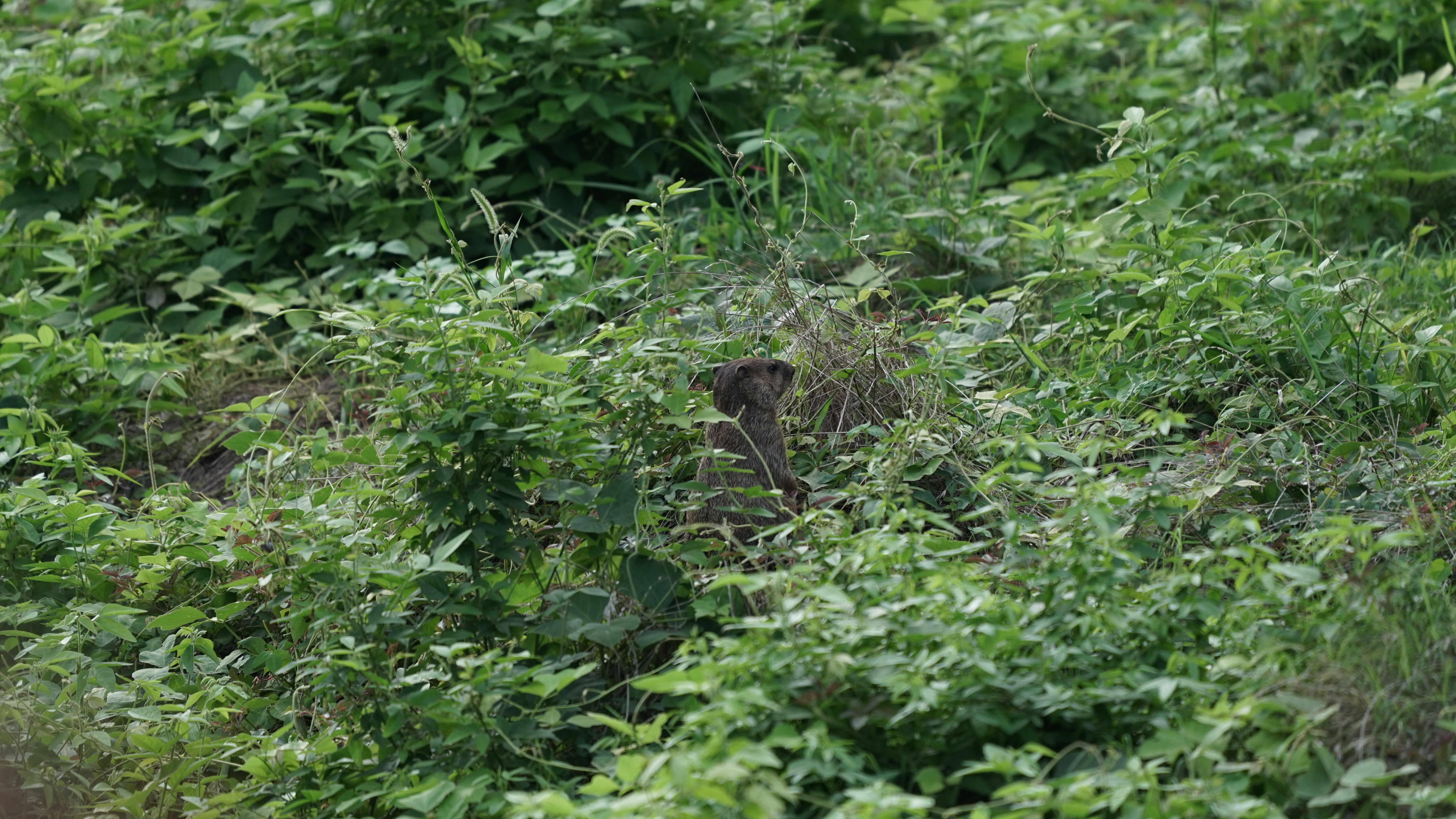
Its chief predators are dogs, foxes and coyotes. When foraging, it will frequently sit up and use its keen eyesight to survey the surroundings. The slightest sign of danger sends it scurrying for the refuge of its underground burrow.