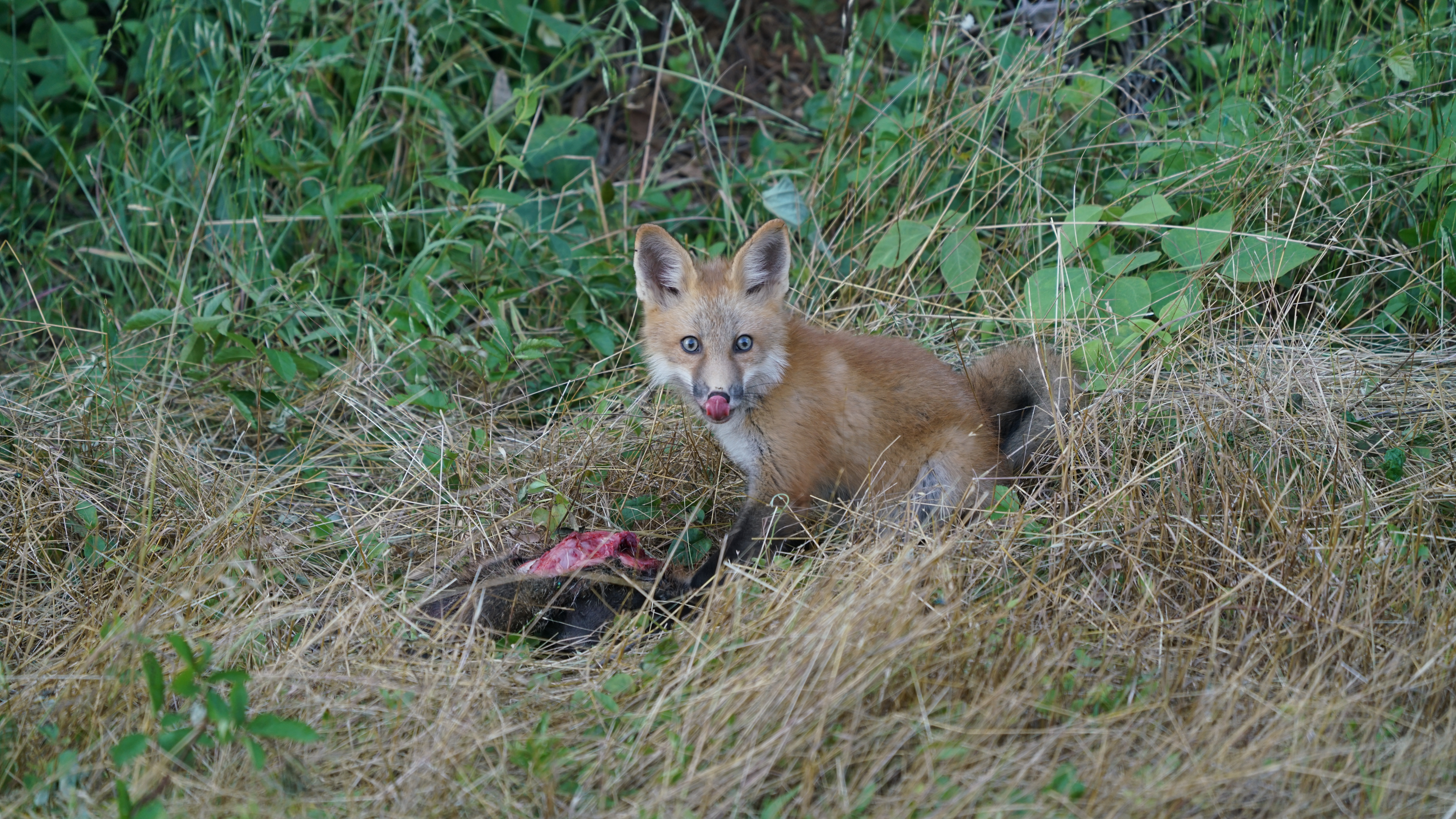
Red Fox
Appearance:
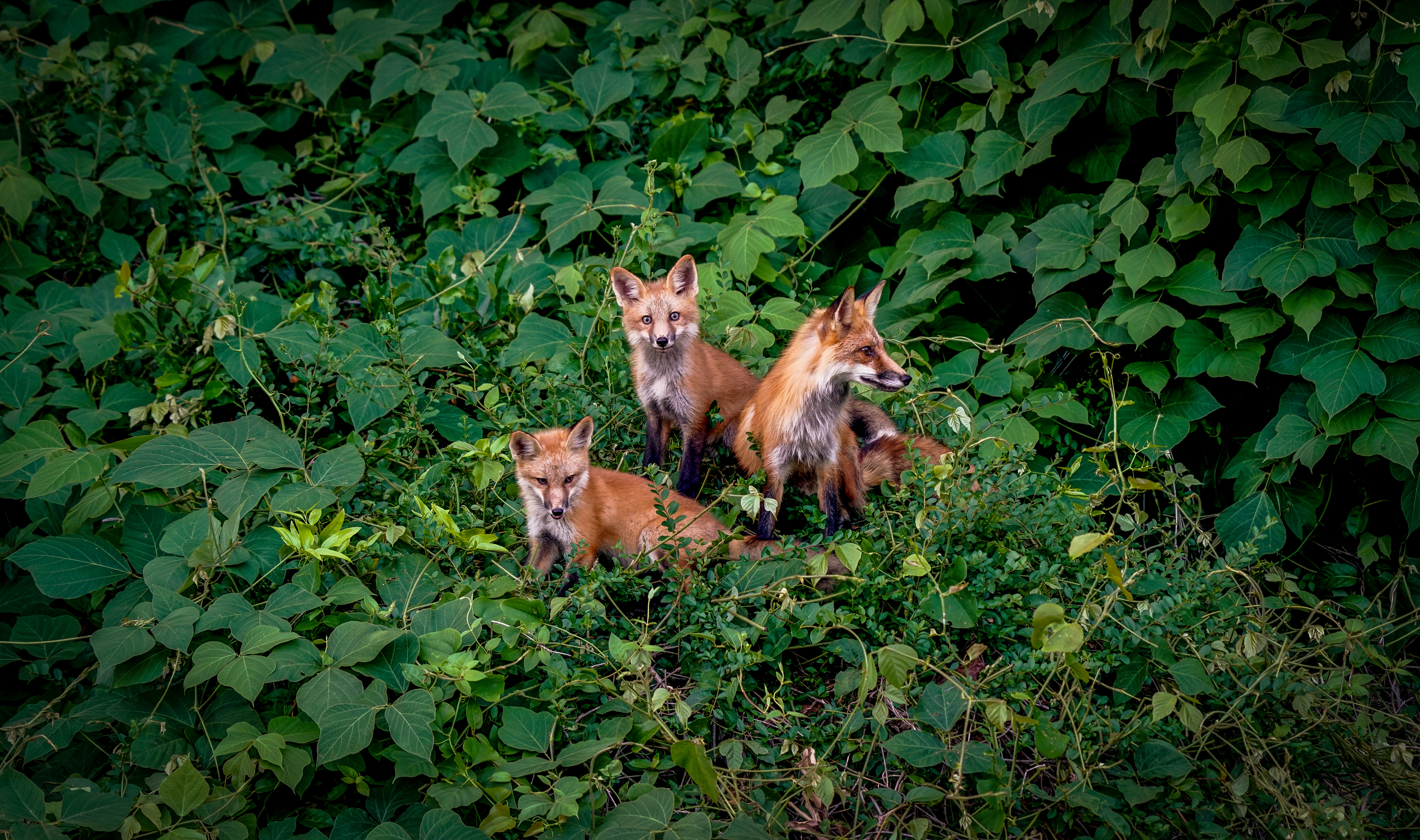
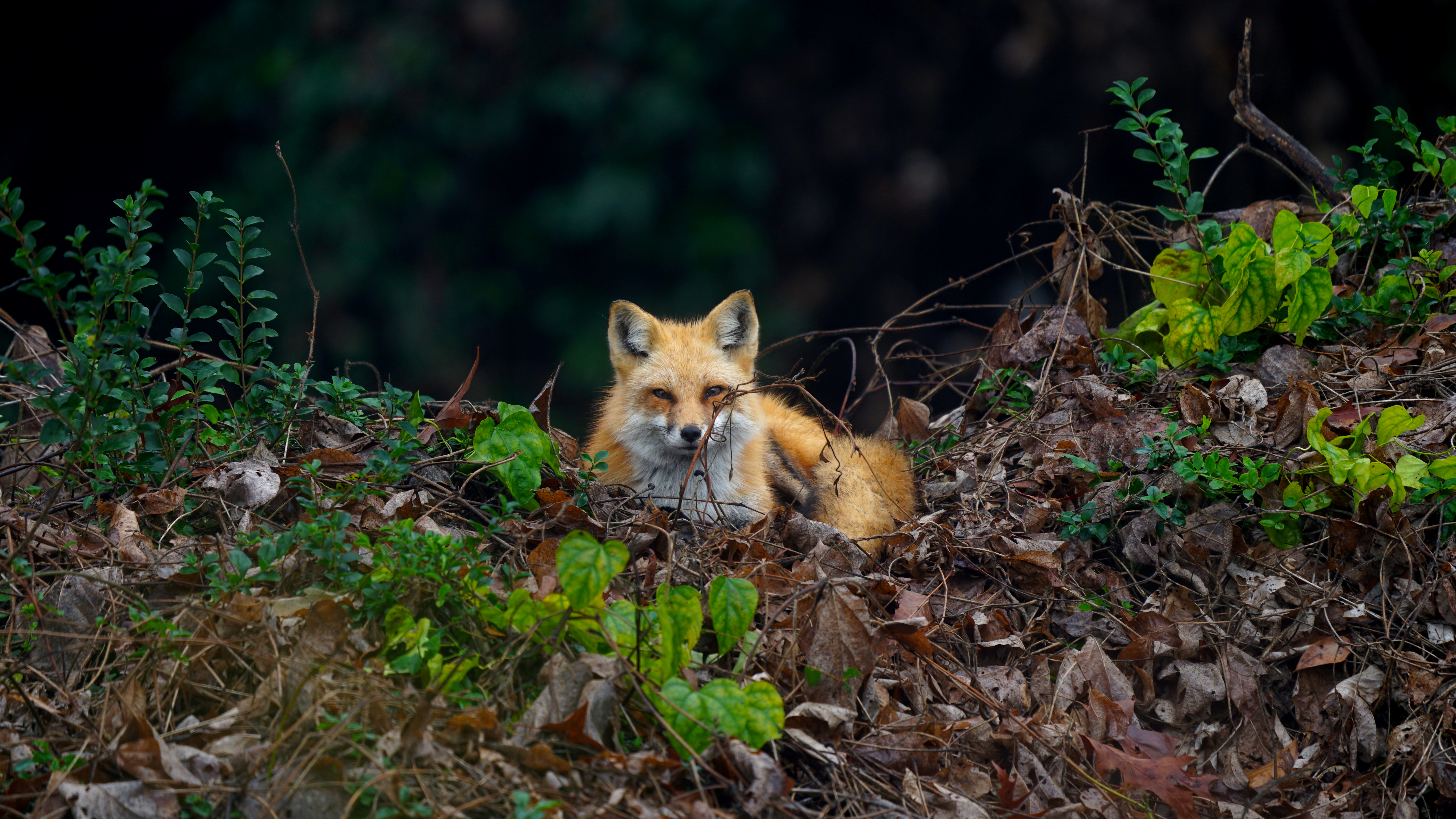
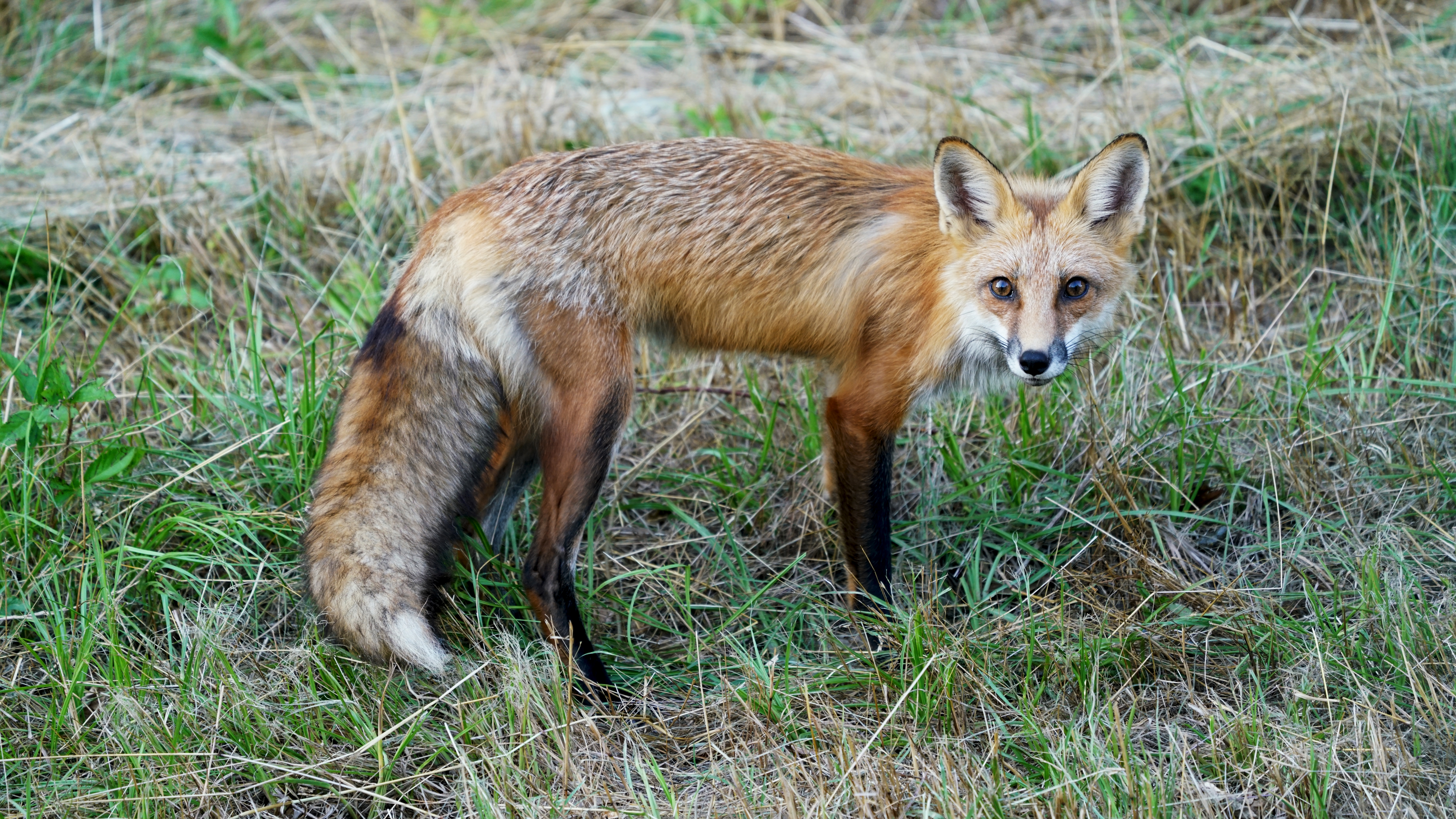
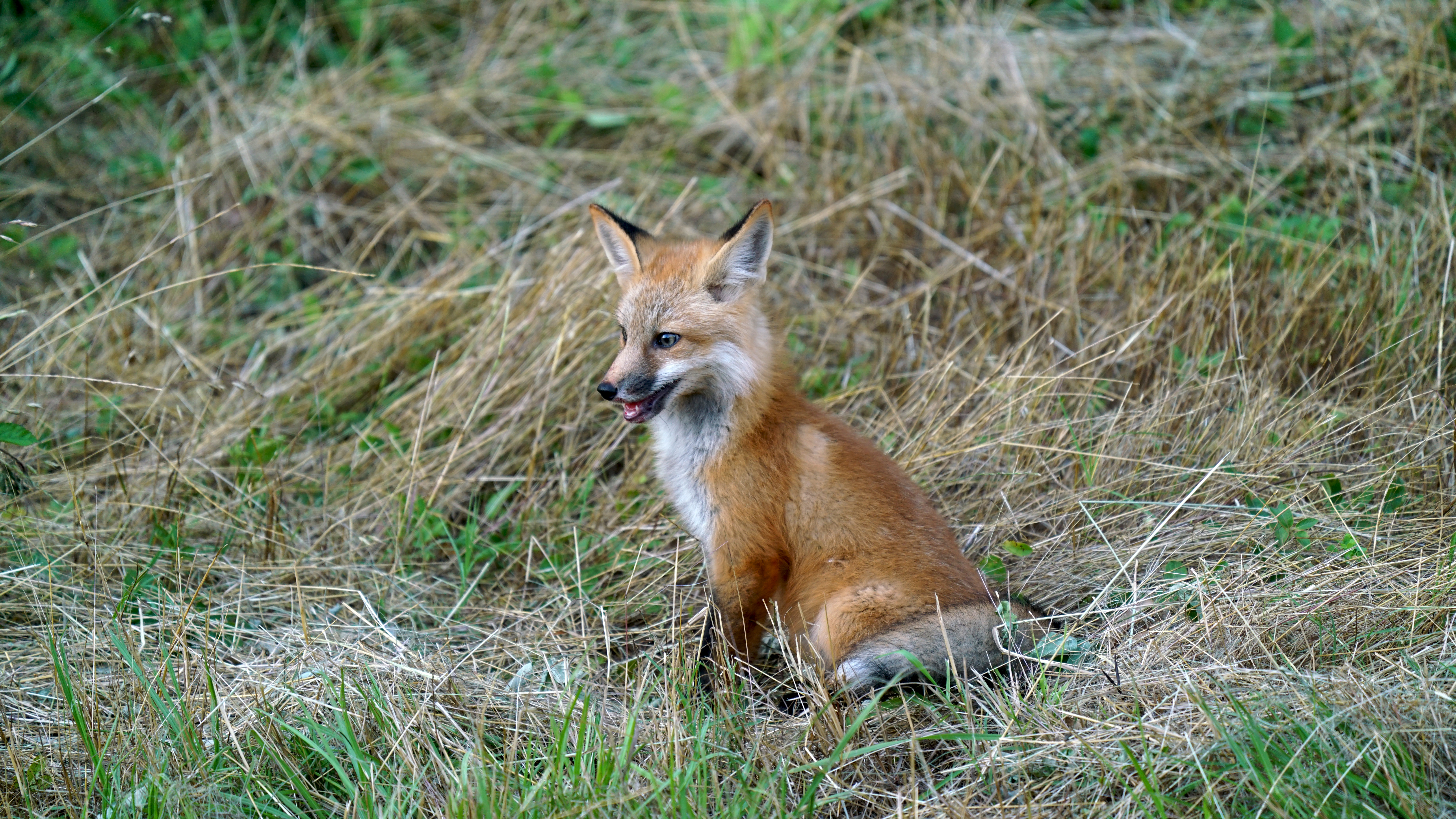
The red fox is generally a reddish color with a white underbelly, chin and throat. It has a long, black, bushy tail with a white tip. The backs of their ears, lower legs and feet are also black. The majority of red foxes are reddish however, different color phases do occur. The color phases include a black phase, black with silver tipped guard hairs (silver fox), reddish brown with a dark cast across the shoulders (cross fox), and an intermediate phase. No matter the color variation, all red foxes have the distinctive white-tipped tail.
Habitat:
The red fox will utilize a variety of habitat types. They can be found in forested lands as well as brush-lands. However, the most preferred habitat contains open and/or cultivated lands interspersed with wooded areas. This habitat serves two major purposes. The open or cultivated land provides adequate numbers of prey species while the wooded areas offer ideal den sites.
The red fox is generally nocturnal and is seldom seen so the best time to find them is at dusk or dawn. Home ranges of the red fox can average up to two and one-half square miles. The home range may increase up to five square miles during winter months when food can be scarce.
Behavior:
The red fox is a carnivore that feeds primarily on rats, mice and rabbits. Other prey species may include small mammals, birds, and insects. Small amounts of fruit and other plant materials are included in the red foxes’ diet in some seasons.
Red foxes make their dens in a variety of locations. Old sawdust piles, holes under rocks, ditch banks and abandoned dens of other animals are utilized by the red fox as den sites. Mating occurs in February and March, with only one litter per year being produced. The gestation period lasts about 53 days.
Red foxes are very beneficial in helping to control populations of some small mammals, especially rodents. They are an important and valuable part of Alabama’s fauna, and are enjoyed by hunters, trappers, and naturalists alike.