
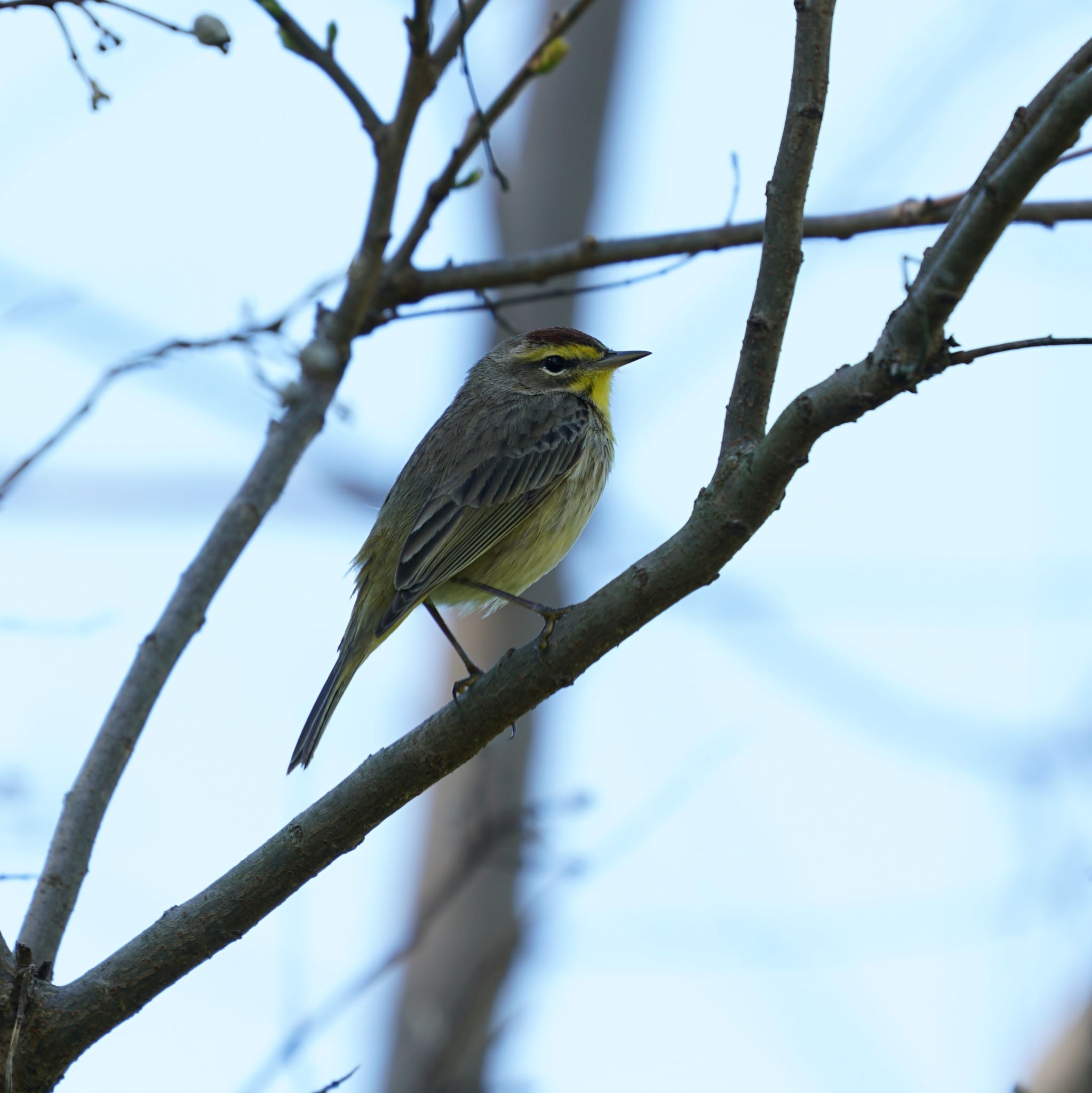
Palm Warbler
Appearance:
Length: 4.7-5.5 in Weight: 0.3-0.5 oz Wingspan: 7.9-8.3 in
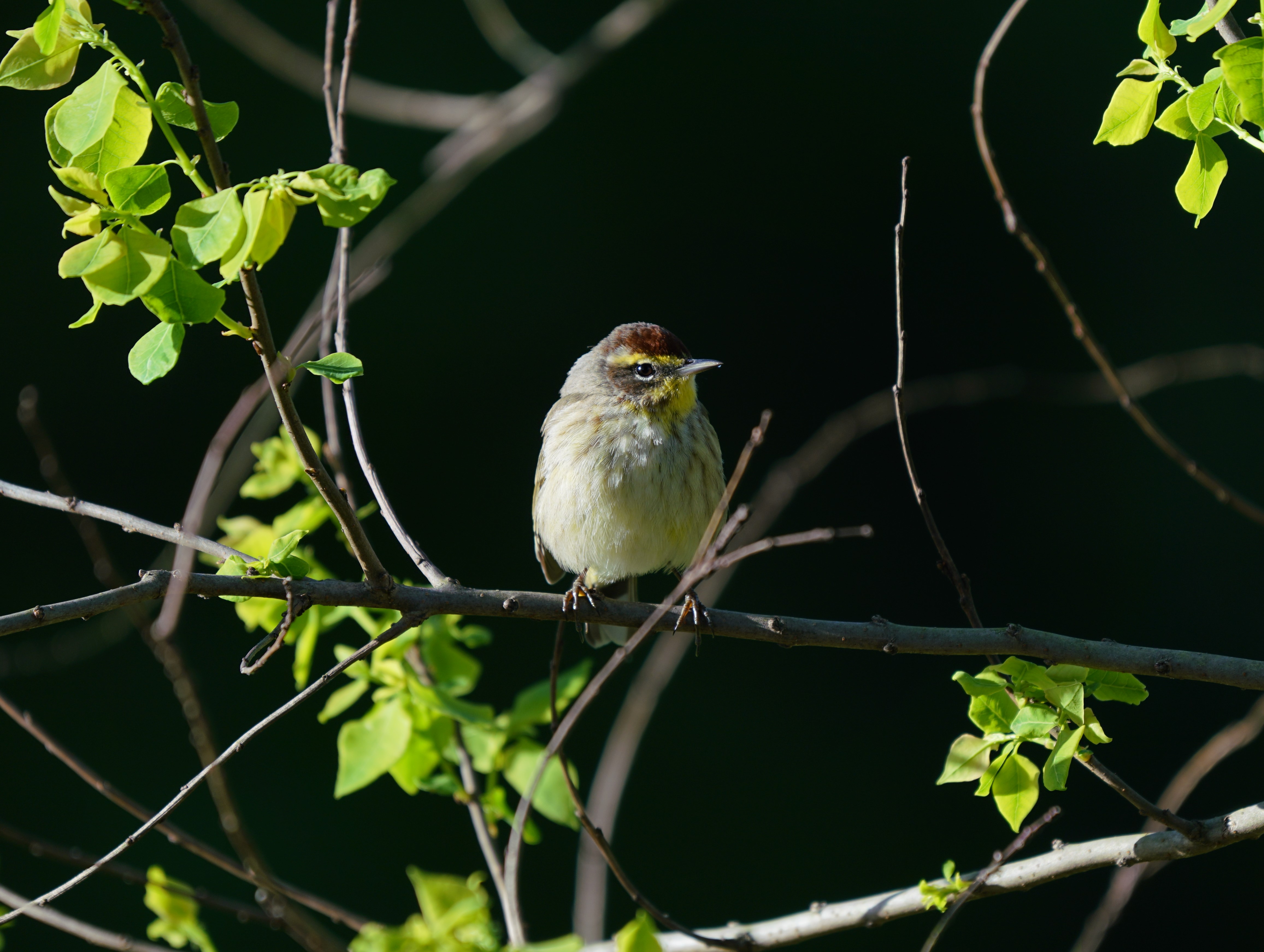
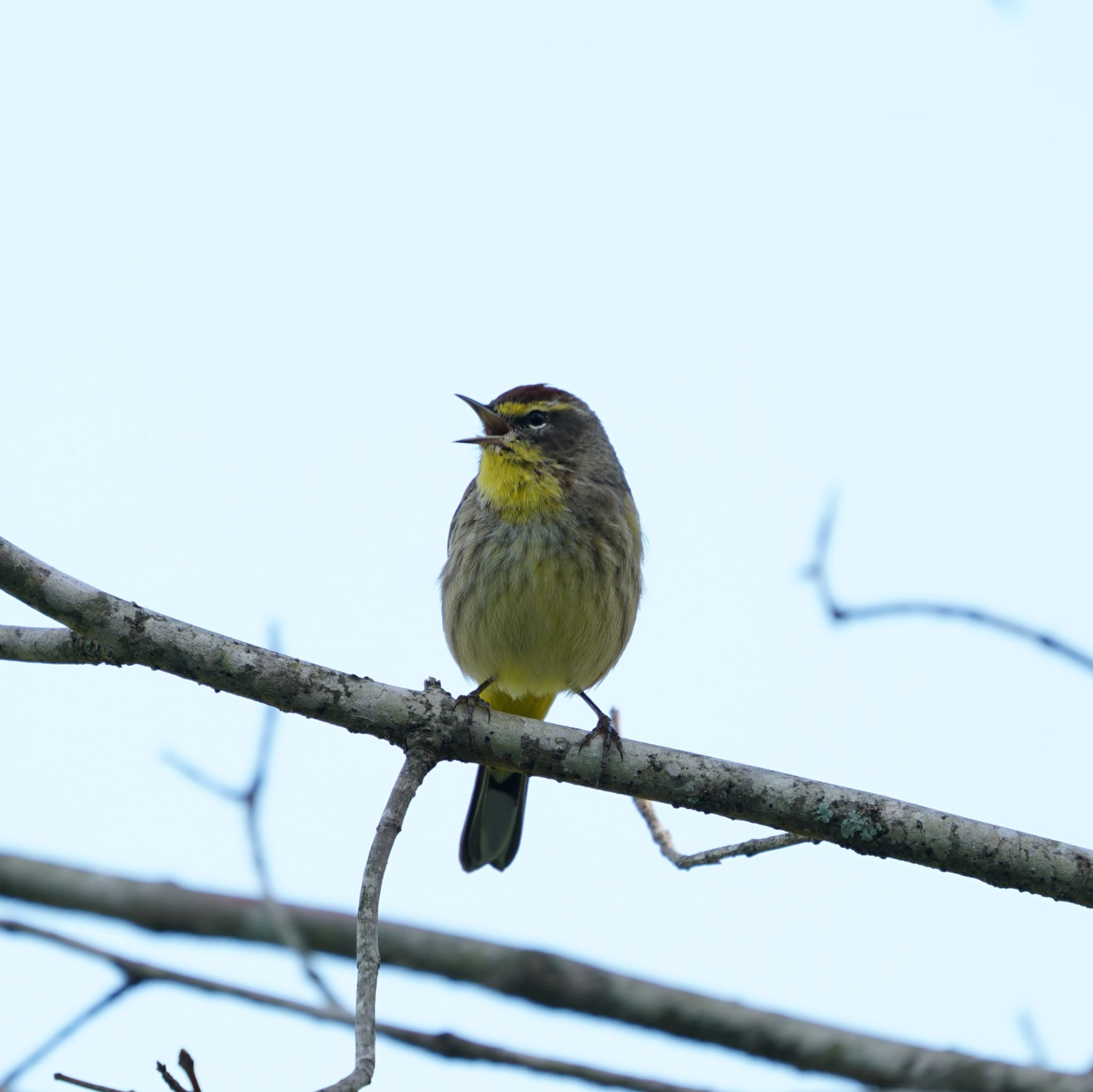
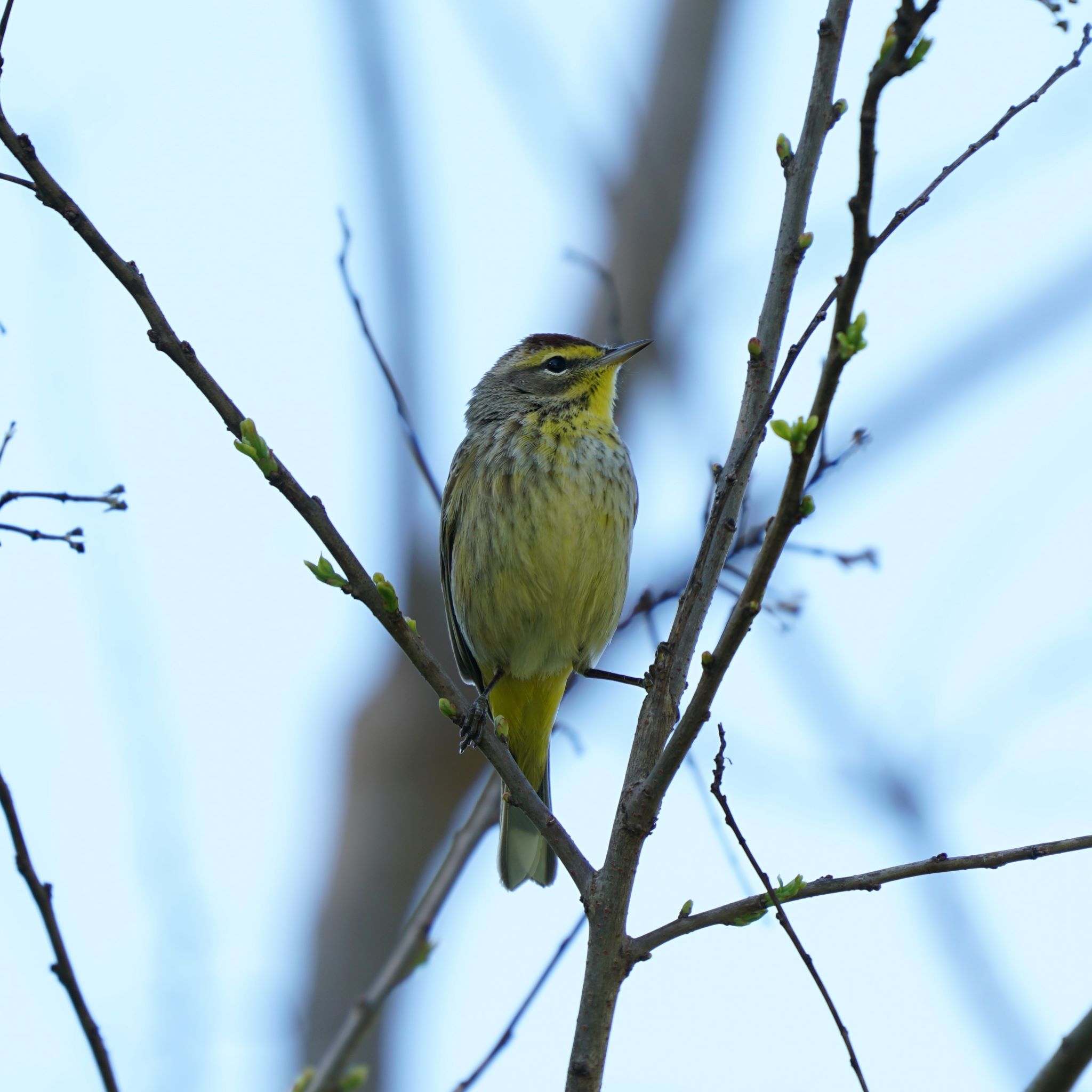
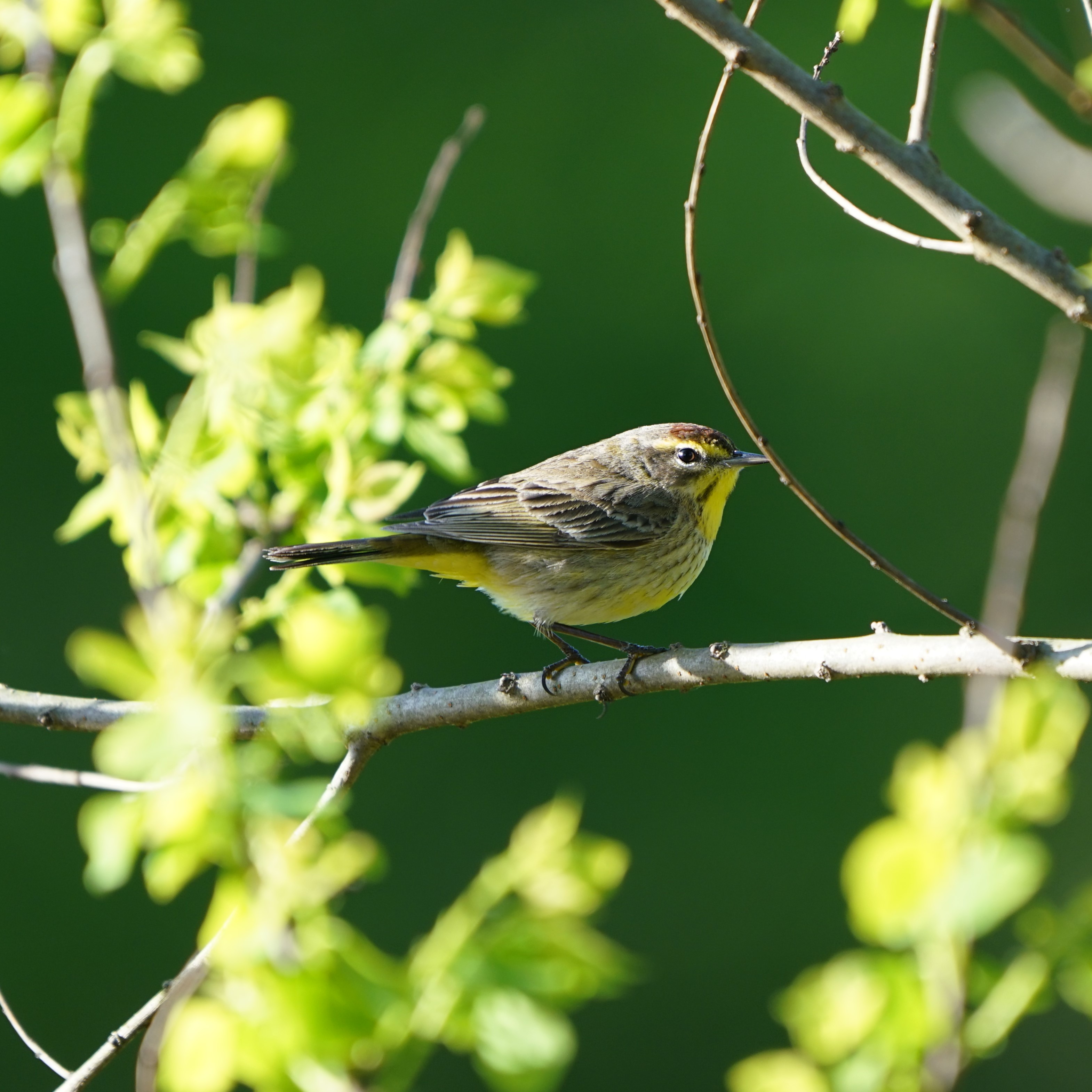
Palm Warblers are small songbirds, but they are on the larger side for a warbler and have a fuller-looking belly. Their posture is more upright than a typical warbler and more like a pipit—especially noticeable when they are on the ground. Their tails and legs are longer than most warblers contributing to the pipit-like shape. Palm Warblers are dull brownish-olive above with yellow under the tail and throat. The outside corners of their tails flash white in flight. In eastern birds, the belly is yellow, while in western birds the belly is white. Sexes are similar, and during the breeding season, they have a rusty cap and some rusty streaking on the belly. Nonbreeding birds have paler yellow under tails and a dull brown crown.
Habitat:
During migration and winter, Palm Warblers use weedy fields, forest edges, fence rows, and other areas with scattered trees and shrubs. They breed in the boreal forest of the far north, where they use bogs with scattered evergreen trees and thick ground cover.
Behavior:
This is one bird where behavior—this bird’s near-constant tail-wagging—can help confirm its identity. They mainly forage on open ground or in low vegetation, rather than in forest canopy as many warblers do (although they do sing from high perches in trees and shrubs).