Northern Mockingbird
Appearance:
Length: 8.3-10.2 in Weight: 1.6-2.0 oz Wingspan: 12.2-13.8 in
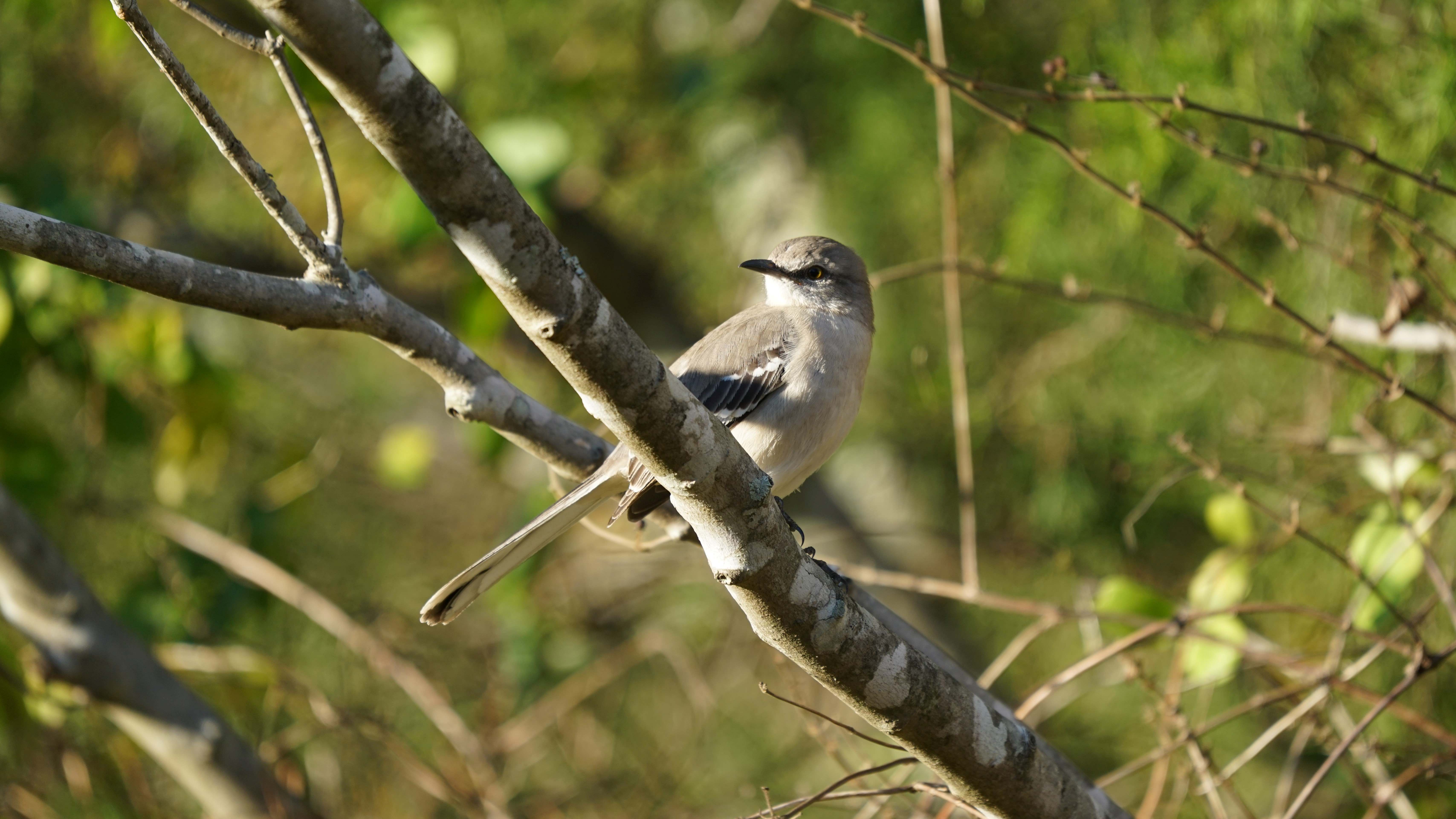
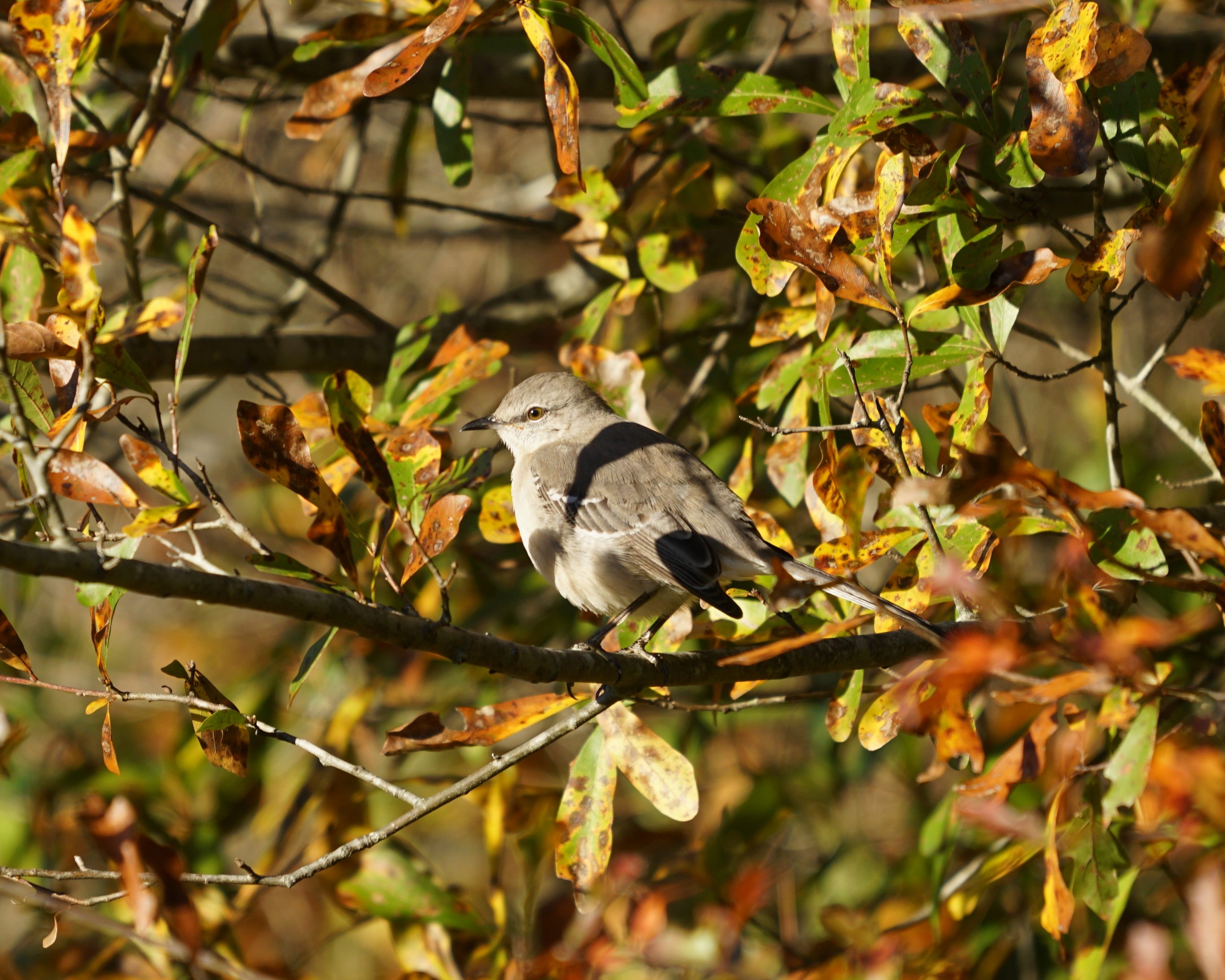
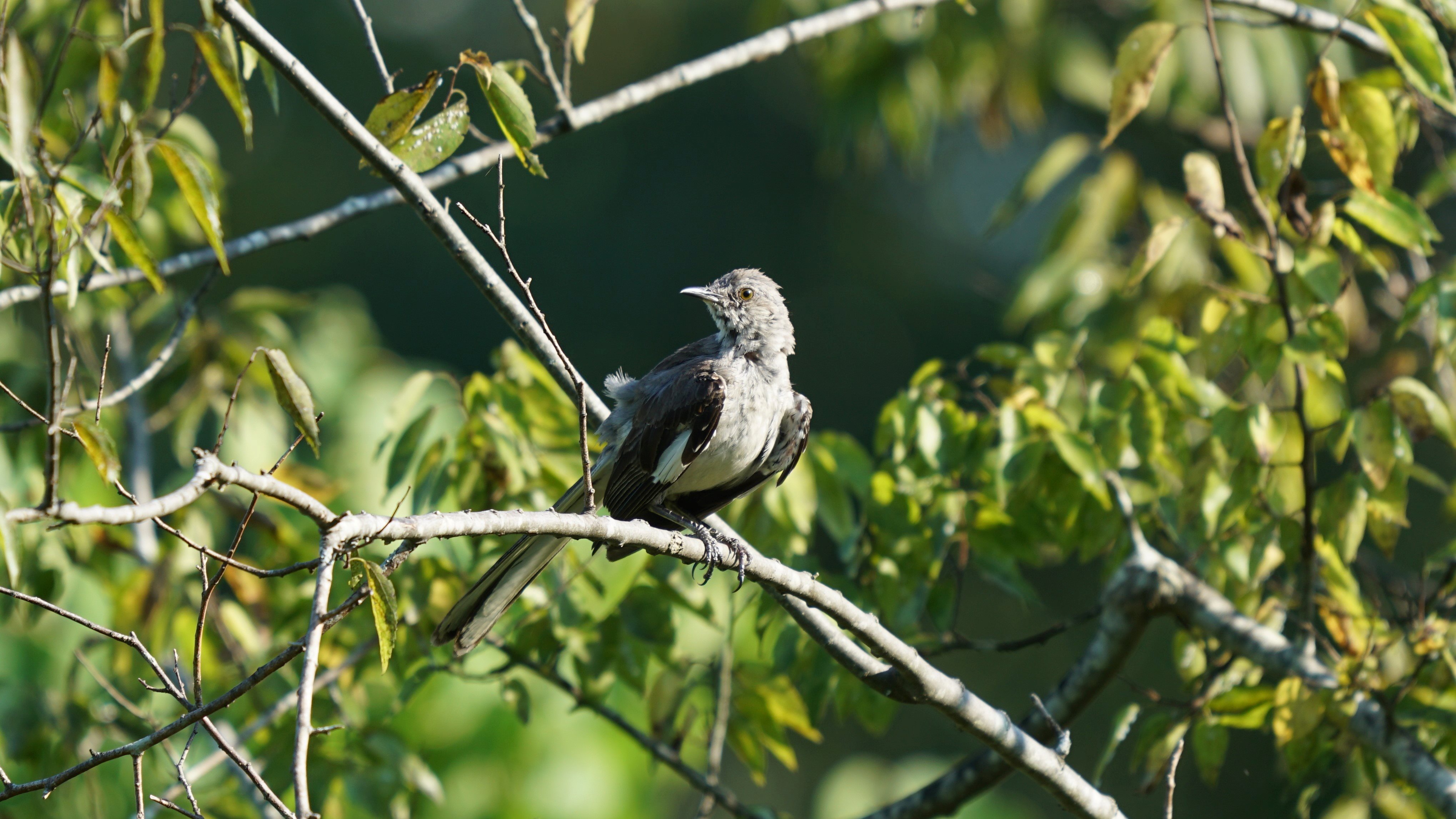
A medium-sized songbird, a bit more slender than a thrush and with a longer tail. Mockingbirds have small heads, a long, thin bill with a hint of a downward curve, and long legs. Their wings are short, rounded, and broad, making the tail seem particularly long in flight. Mockingbirds are overall gray-brown, paler on the breast and belly, with two white wingbars on each wing. A white patch in each wing is often visible on perched birds, and in flight these become large white flashes. The white outer tail feathers are also flashy in flight.
Habitat:
Northern Mockingbirds are extermely common in Alabama and can commonly be seen in short, grassy lawn areas, which they prefer when foraging for insects. For this reason, it is quite fond of suburban mowed lawns. It is not common in dense forest interiors but can be seen at forest edges.
Behavior:
The Northern Mockingbird enjoys making its presence known. It usually sits conspicuously on high vegetation, fences, eaves, or telephone wires, or runs and hops along the ground. Found alone or in pairs throughout the year, mockingbirds aggressively chase off intruders on their territory. The mockingbird is omnivorous. About half of its diet consists of arthropods, including beetles, ants, bees, wasps, and grasshoppers. It will also eat earthworms and small lizards. They are aggressive feeders that are often observed chasing down a grasshopper on a lawn, running, hopping and lunging at the prey, or flying just above the ground maneuvering behind a large wasp. The mockingbird also enjoys eating fruits, both wild and cultivated.