Great Blue Heron
Appearance:
Length: 38.2-53.9 in Weight: 74.1-88.2 oz Wingspan: 65.8-79.1 in
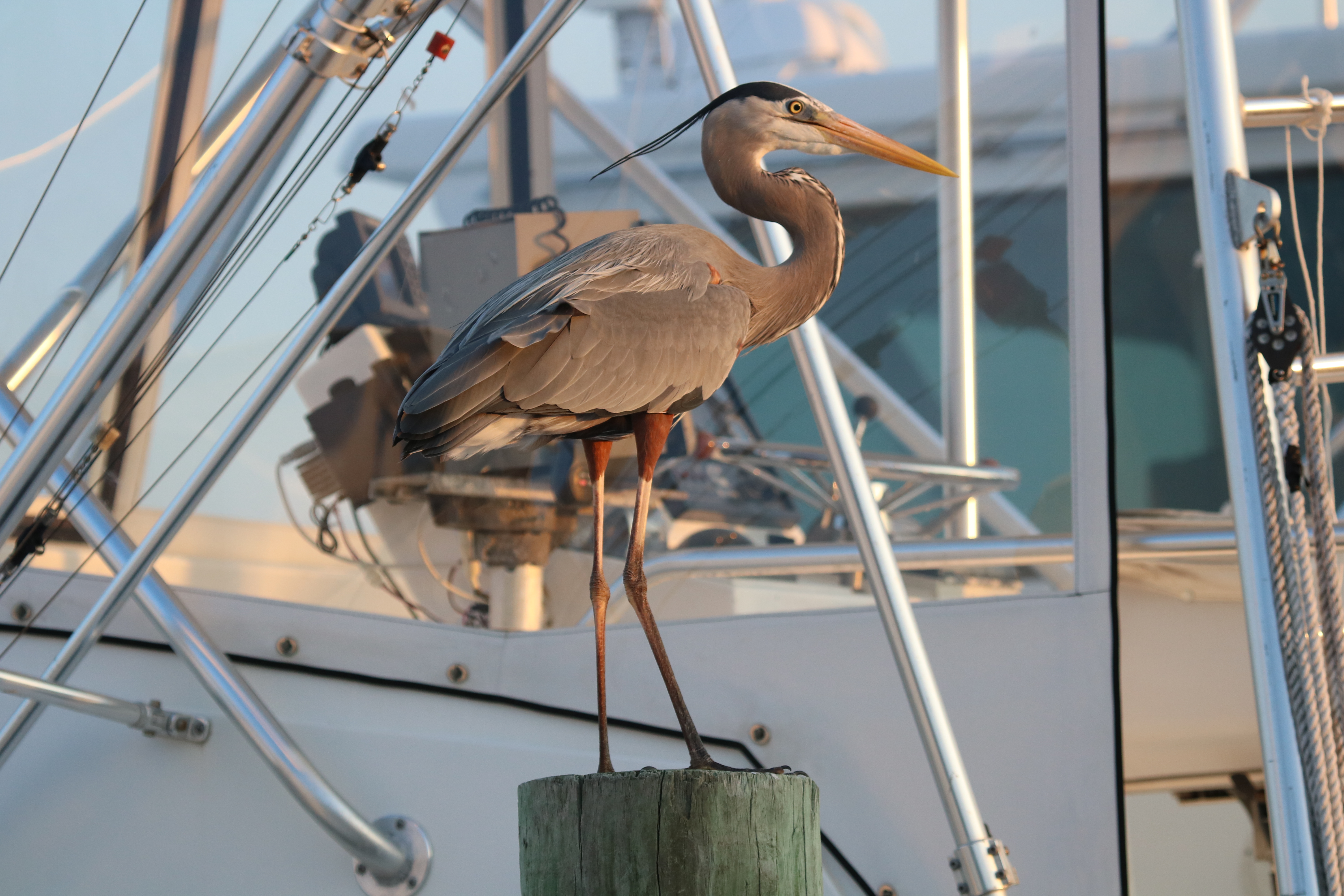
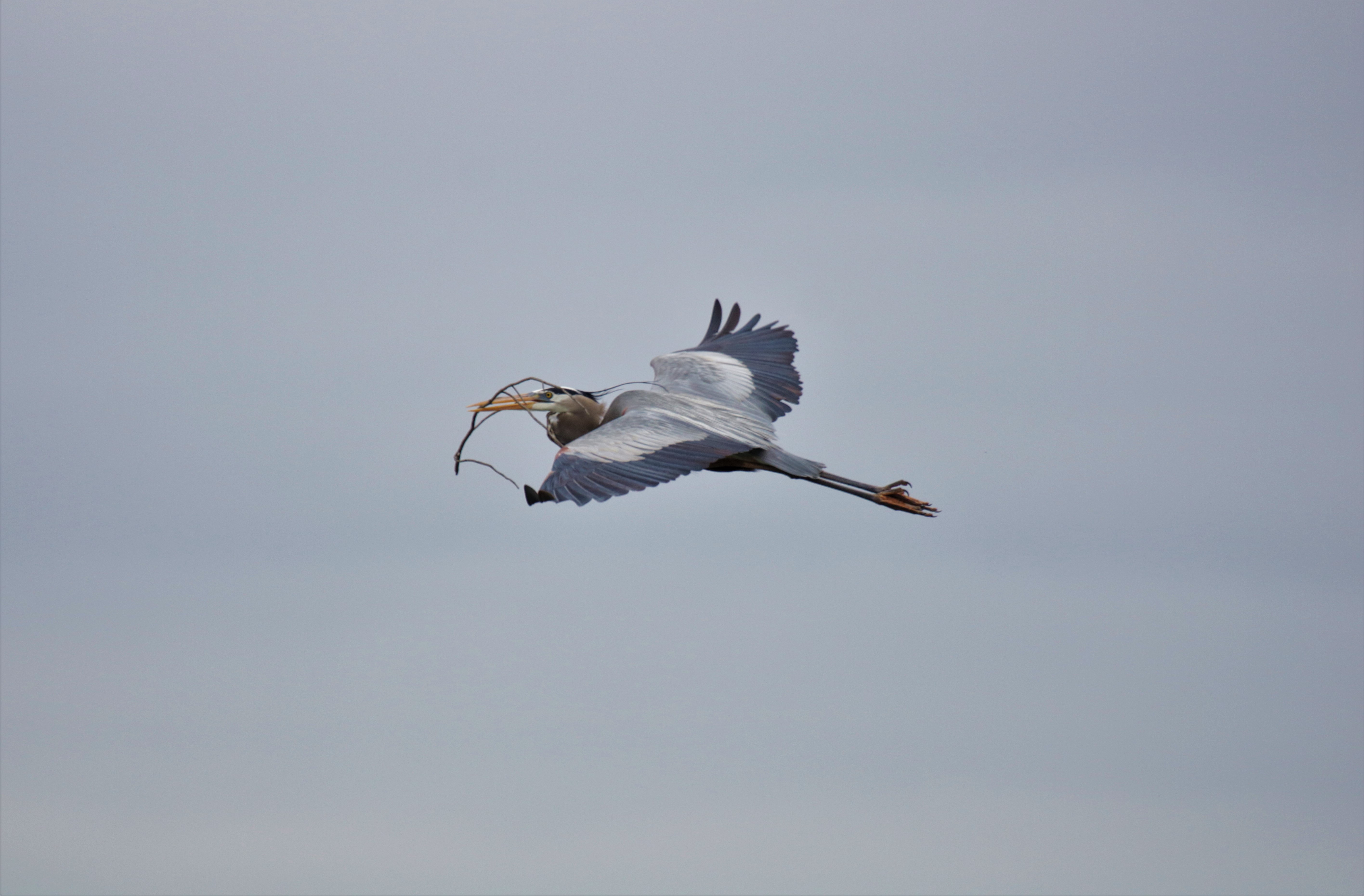
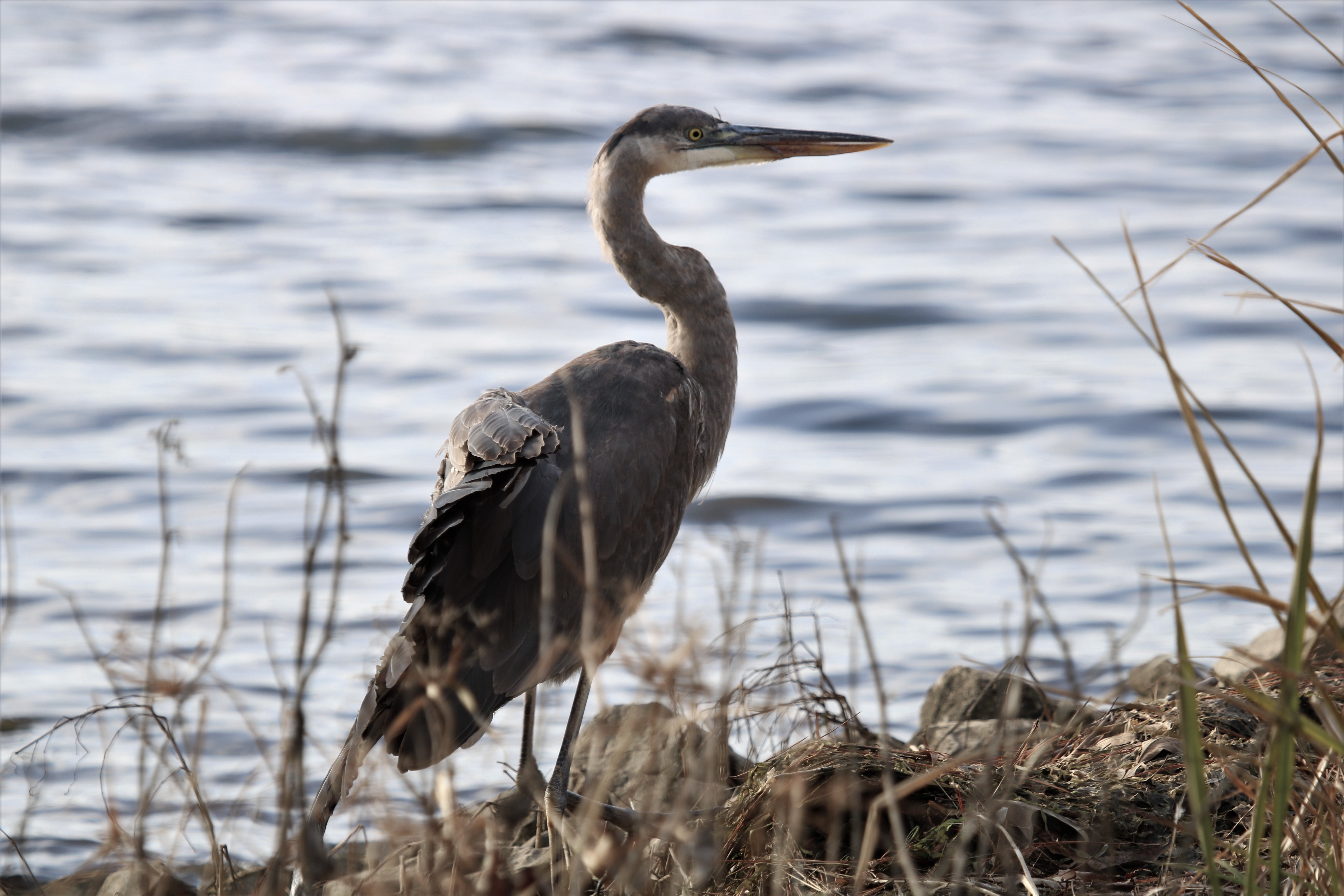
A large lean, slate-gray colored heron with a white head and black stripe extending above the eye; a white foreneck streaked with black; a dagger-like bill and long legs. Breeding adults have a yellowish bill and ornate plumes on the head, neck and back. Nonbreeding adults lack plumes, and the bill is yellower. Juvenile birds have a black crown and no plumes. All herons fly with their neck folded. This distinguishes them from cranes, geese, ibises, storks and cormorants, all of which fly with the neck extended.
Habitat:
Look for Great Blue Herons in shallow water areas of lakes, rivers, streams, ponds, marshes, swamps and tidal flats. They can be found almost anywhere there is shallow water and a source of fish. They are particularly numerous in the tailraces below river dams and around commercial catfish ponds. Breeding birds gather in colonies or “heronries” to build stick nests high off the ground.
Behavior:
Hunting Great Blue Herons wade slowly or stand statue-like, stalking fish and other prey in shallow water or open fields. Watch for the lightning-fast thrust of the neck and head as they stab with their strong bills. Their very slow wingbeats, tucked-in neck and trailing legs create an unmistakable image in flight.