Black Vulture
Appearance:
Length: 23.6-26.8 in Weight: 56.4-77.6 oz Wingspan: 53.9-59.1 in
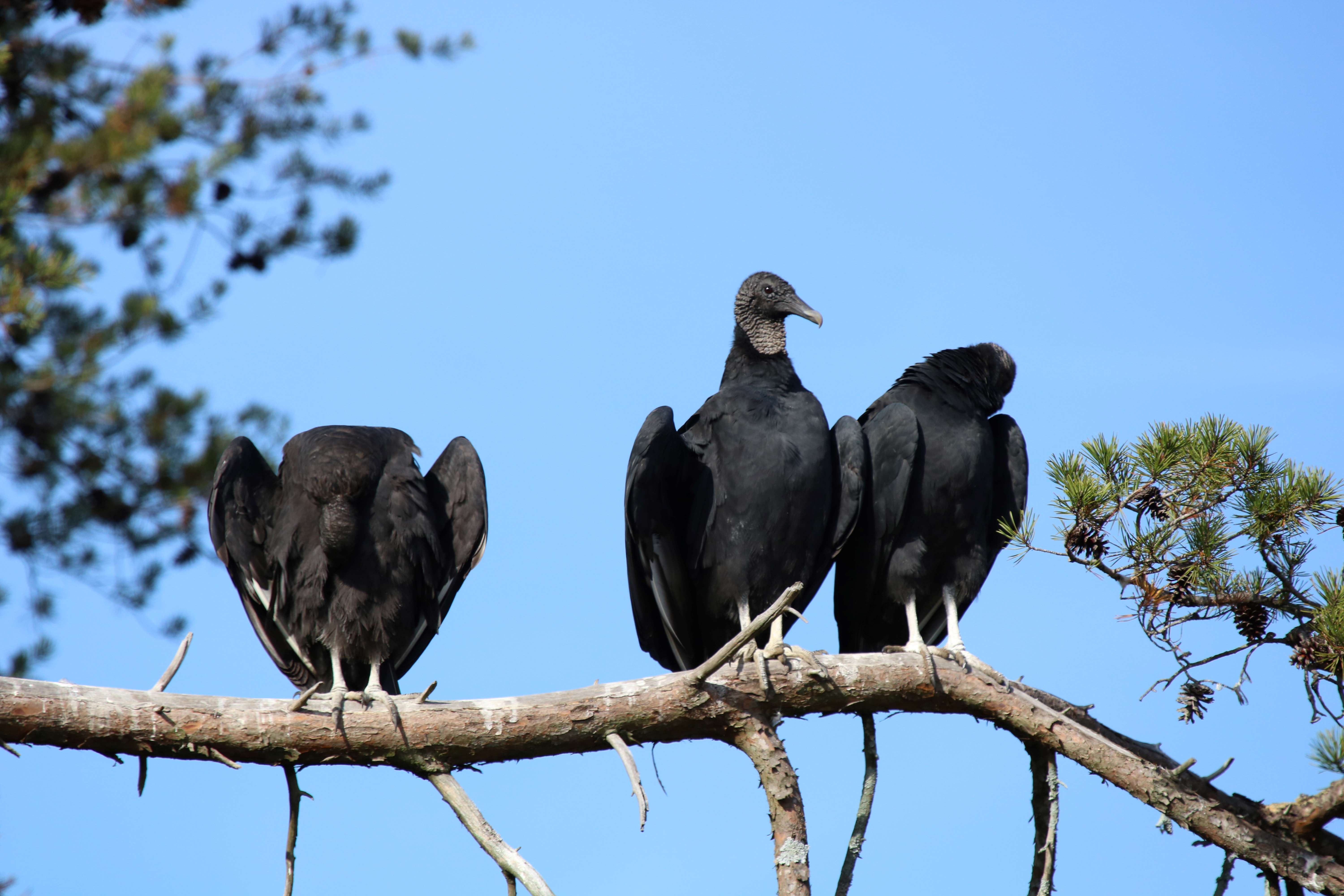
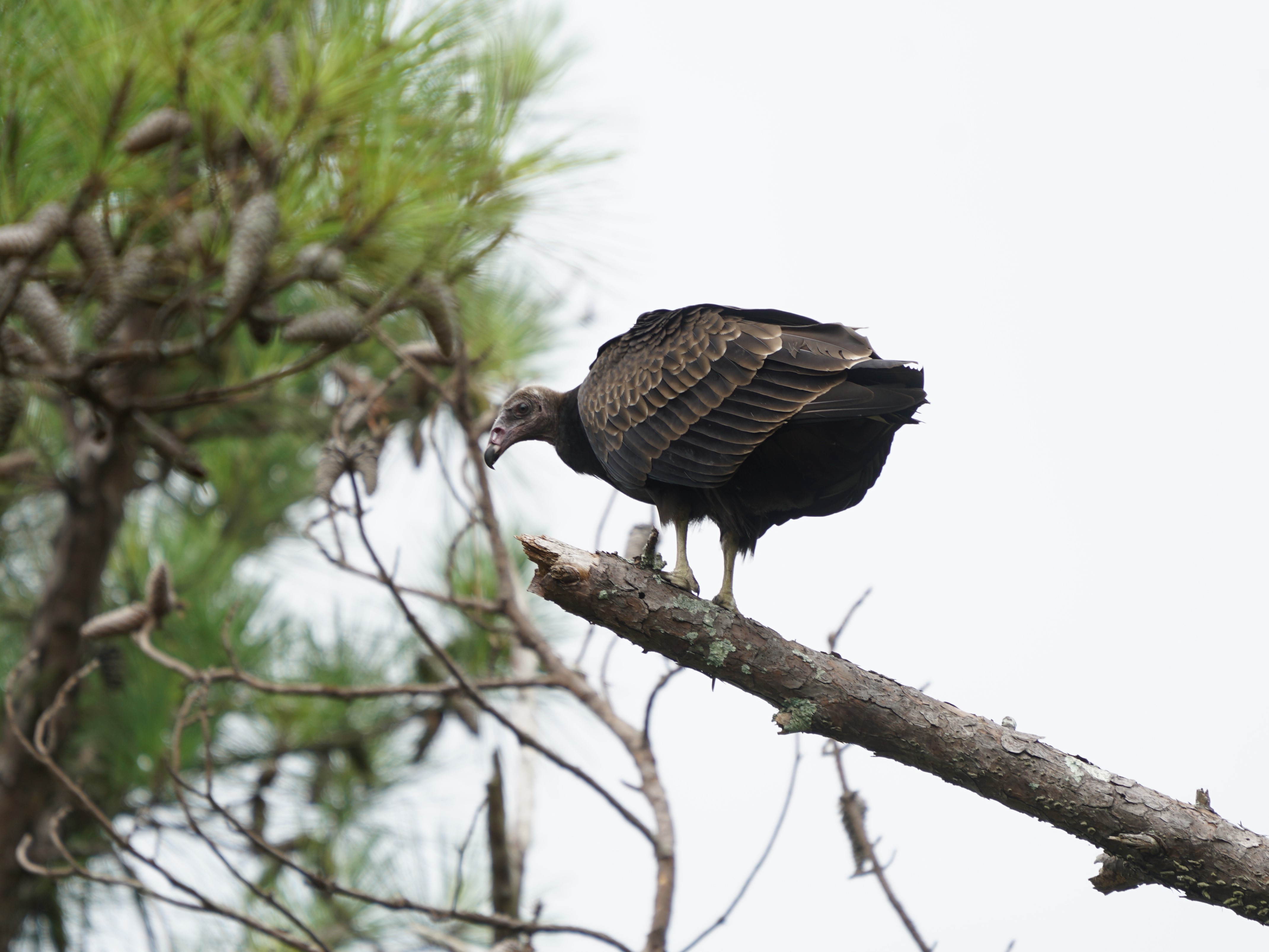
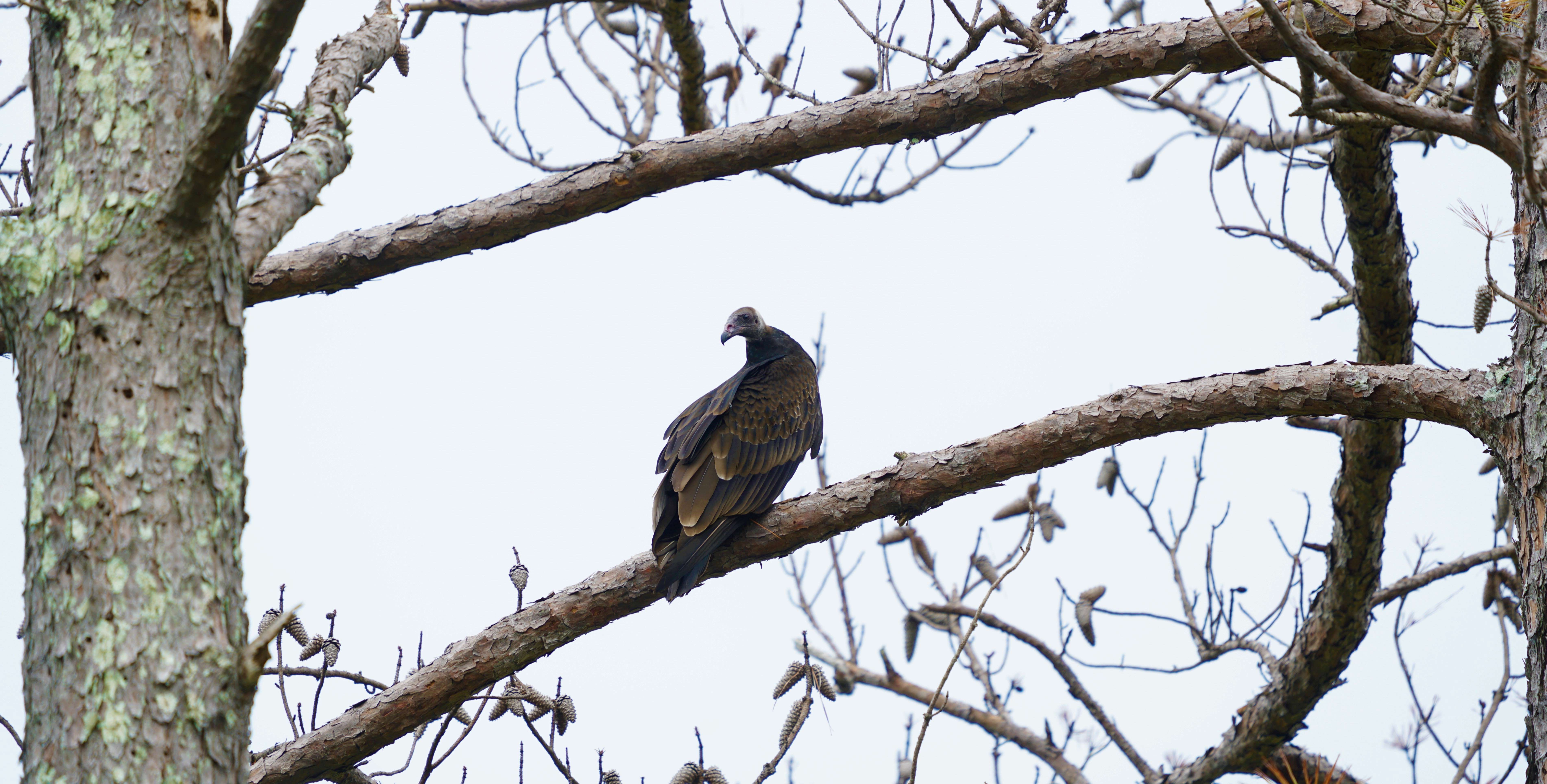
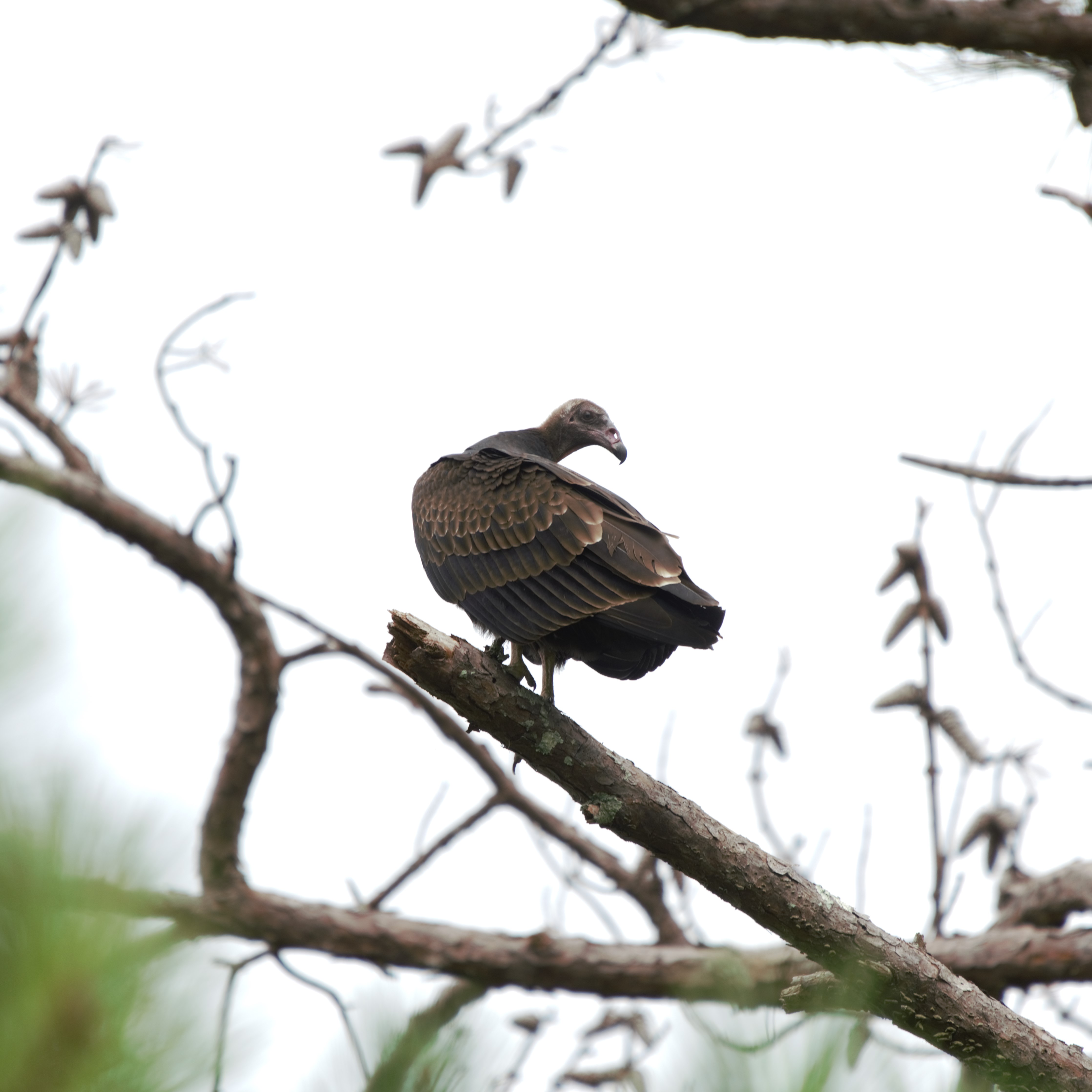
The black vulture is primarily black, as its name suggest, with a white patch near each wing tip. The head is bare and grayish in color. Compared to the turkey vulture, it has a short tail. When in flight, it flaps its shorter and rounder wings more often and more rapidly than the turkey vulture.
Habitat:
Black vultures can be found in open country, but they breed in light woodlands and thickets. Keep your eyes to the skies on warm days for Black Vultures soaring high up on thermals. Their broad, forward-canted wings, small head, and short tail give them a distinctive silhouette even if you can’t see any color. They also have a distinctive flight style, giving a few deep, rapid wingbeats and then snapping their wings out wide a little like a baseball umpire signaling “Safe.” In the morning while the air is still cool, look for flocks perched in roost trees or structures, where you may see them spreading their wings to catch the sun. You may also spot these vultures gathering at roadkill or around dumpsters.
Behavior:
Black vultures do not construct a nest and will sometimes lay their eggs on the ground under a bush, in thickets, in a hollow tree or log, in caves, or occasionally in abandoned buildings. Breeding is done by solitary pairs. They often lay two (rarely three) eggs which are greenish white with brown markings. The eggs are different in size, color, markings, and shape. It takes about 37 to 41 days for the eggs to hatch, and both the male and female sit on the nest. Black vultures’ nest two weeks earlier than turkey vultures, and start breeding at around three years of age. Black vultures can often be found roosting with turkey vultures in large communal flocks containing as many as 1000 birds. Their aggressive nature carries over to their roosting behavior and they will dominate turkey vultures for choice roosting positions. Black Vulture makes up for its poor sense of smell by following Turkey Vultures to carcasses. Highly social birds with fierce family loyalty, Black Vultures share food with relatives, feeding young for months after they’ve fledged.