
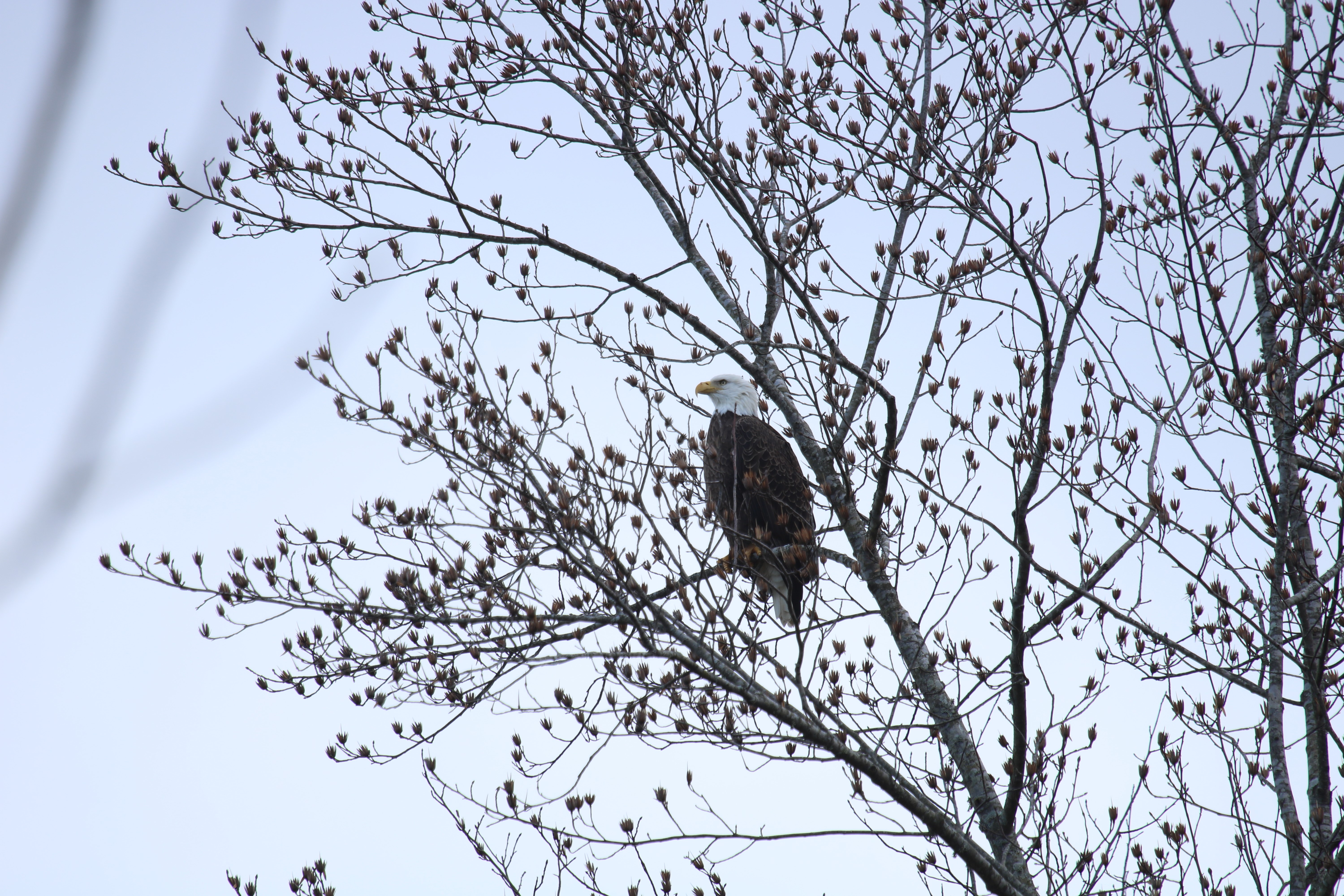
Bald Eagle
Appearance:
Length: 27.9-37.8 in
Weight: 105.8-222.2 oz
Wingspan: 80.3 in
With a wingspan slightly greater than that of the Great Blue Heron the Bald Eagle dwarfs most other raptors including the Turkey Vulture and Red-tailed Hawk. Adult Bald Eagles have white heads and tails with dark brown bodies and wings. Their legs and bills are bright yellow. Immature birds have mostly dark heads and tails; their brown wings and bodies are mottled with white in varying amounts. However, these white feathers as well as the yellow color of the bill do not develop until the eagles reach sexual maturity at about five years of age.
Habitat:
Bald Eagles can be found throughout the state near coasts, rivers, lakes, and anywhere food is plentiful. However, I’ve had the most luck finding them at Lake Guntersville near the dam.
Behavior:
Bald Eagles can mostly be seen either perched near the tops of trees or soaring high in the air as the search for meals. Eagles feed opportunistically on fishes, injured waterfowl and seabirds, various mammals, reptiles, and carrion. The majority of their diet is comprised of fish. They hunt live prey, scavenge, and pirate food from other birds.
Bald eagles mate for life and share all nesting and brood-rearing responsibilities. Large nests are most often built in the crowns of tall trees, usually near water. Occasionally, nests will be constructed on the sides of cliffs, however it is uncommon in southern areas. Typically, breeding pairs will return to the same nests year after year, and repair or restore the nest by adding new material. Nests are very large reaching 10 feet across and weighing about 2,000 pounds. Relatively small at hatching, eaglets need nearly three months of development before leaving the nest. Juveniles are about the same size as adults when they leave the nest, but they don’t reach sexual maturity until they are approximately five years of age. The normal life span of the bald eagle is estimated to be about 30 years.
Photography tip:
Photography Tip: On clear sunny days Bald Eagles like to soar very high while searching for food, which makes them difficult to capture with even the longest telephoto lens. However, I find on overcast or rainy days they tend to stick to perching on the tops of trees which makes them much more cooperative subjects.