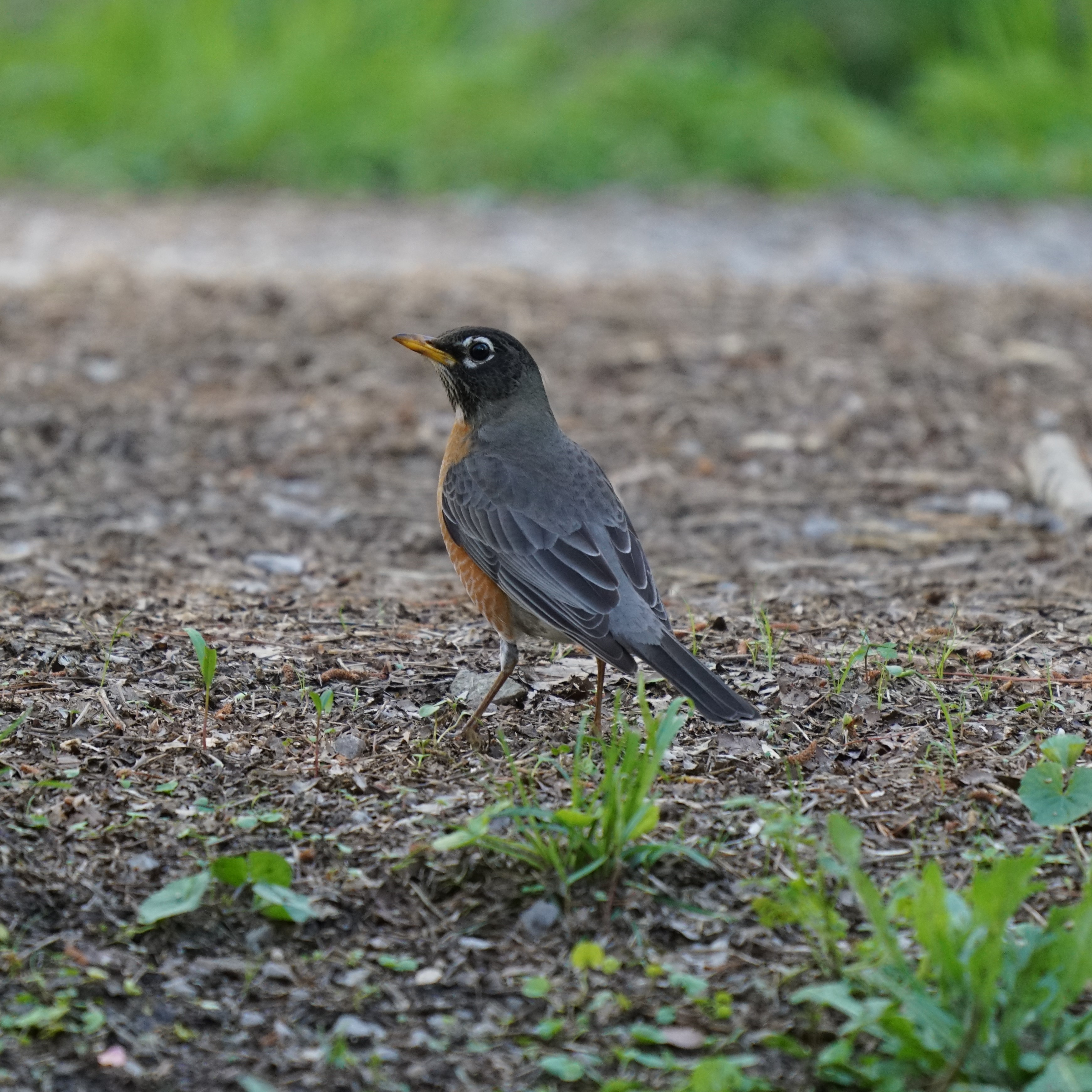
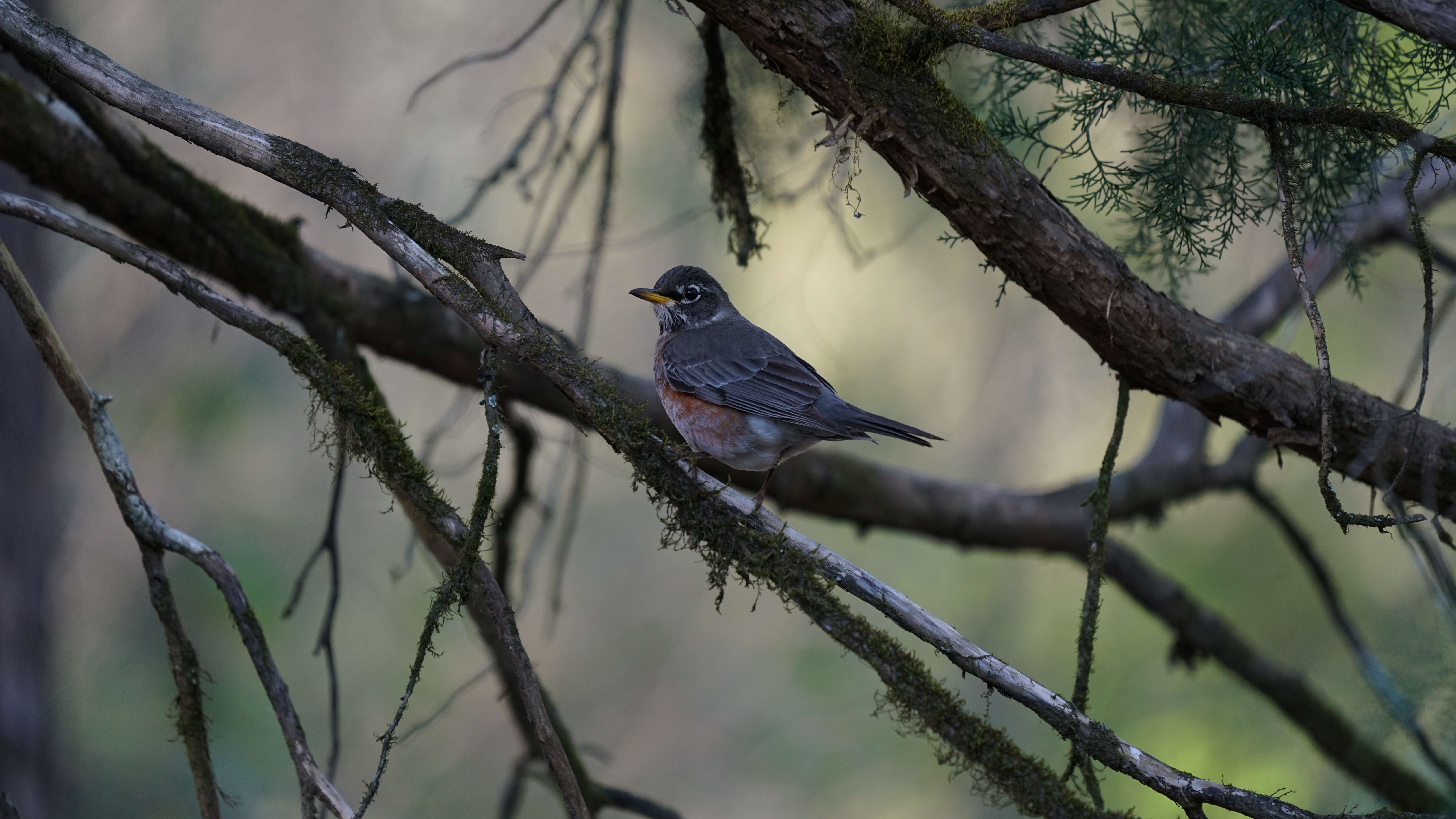
American Robin
Appearance:
Length: 7.9-11 in Weight: 2.7–3 oz Wingspan: 12.2–15.8 in
The largest of the North American thrushes American Robins are gray-brown birds with warm orange underparts and dark heads. In flight, a white patch on the lower belly and under the tail can be conspicuous. Compared with males, females have paler heads that contrast less with the gray back.
Habitat:
American Robins can be found in gardens, parks, yards, golf courses, fields, and pastures, as well as deciduous woodlands, pine forests, shrublands, and forests regenerating after fires or logging. During breeding season, robins seek out lawns and pastures with shade trees, where earthworms are plentiful. Robins are abundant during late fall, winter and early spring in swamps, farmland, and open woodlands, especially areas with heavy crops of winter berries.
Behavior:
American Robins are industrious birds that bound across lawns or stand erect, beak tilted upward, to survey their environs. When alighting they habitually flick their tails downward several times. In fall and winter, they form large flocks and gather in trees to roost or eat berries. Although robins are considered harbingers of spring, many American Robins spend the whole winter in their breeding range. But because they spend more time roosting in trees and less time in your yard, you're much less likely to see them.